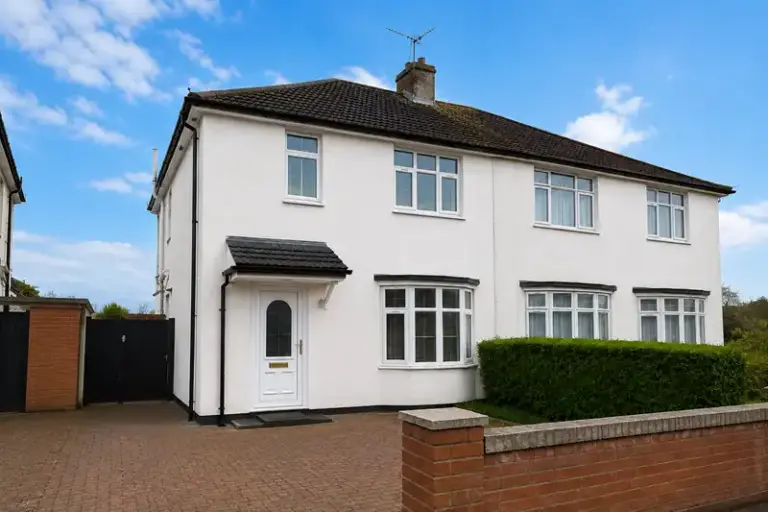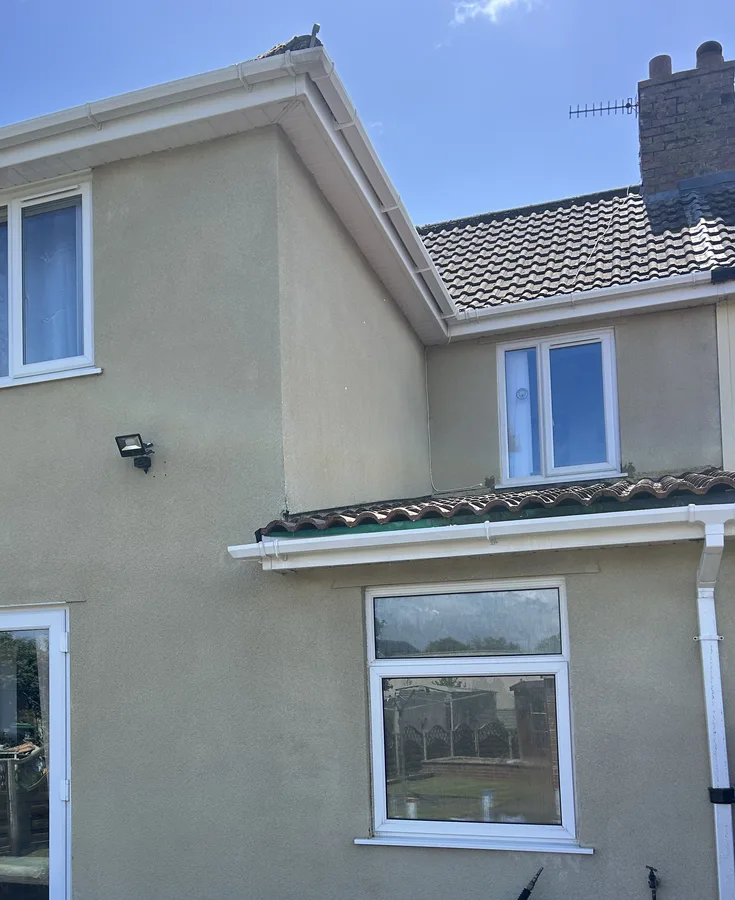
Your render looked crisp and clean when it was new. Now there is a green tint on one wall, rusty red patches on another and dark streaks under the windows. If you are asking why your render is turning green, red or black, here is what is going on and what actually fixes it.
Render gone green or red?
Send us a few photos and we will tell you what it needs.
The short answer: render turns green, red or black because algae, mould and other organic growth are living on it. It is most common on damp, shaded and north-facing walls. It is not a fault with the render and it does not need repainting. It needs a soft wash treatment that kills the growth without damaging the finish.
What the colours mean
- Green. Green algae, the most common of all. It starts as a faint tint in damp areas and thickens over time.
- Red or orange. Also an algae, even though it does not look like one. It often appears as rusty patches or streaks and is very common on rendered houses in the UK.
- Black streaks. Usually a mix of mould, algae and dirt carried down the wall by water, typically below the roofline, under window sills and beneath anything that drips.
All three are organic growth, and all three respond to the same kind of treatment.
Why it happens to render in particular
Render has a slightly textured, slightly porous surface. That texture holds on to moisture and gives airborne spores somewhere to settle. Modern through-coloured renders are often pale, cream or white, so even light growth shows up clearly.
Why some walls are worse than others
- North-facing walls get little sun and stay damp for longer.
- Trees and hedges close to the house keep walls shaded and supply the spores.
- Water running down the wall. Overflowing or leaking gutters, short sills and dripping overflow pipes leave the dark streaks you see below them.
- Sheltered spots at the back or side of a house, where the air does not move much.
If the worst staining sits directly under the gutter line, the gutters are often part of the cause. Here are the signs of blocked gutters to look out for.
Is it damaging the render?
In the short term it is mainly a cosmetic problem, although a very visible one. Stained render makes a well-kept home look neglected. Left for years, growth keeps the surface damp and becomes harder to shift, so it is better dealt with sooner than later.
Why you should not jet wash it off
The natural instinct is to reach for a pressure washer. On render, that is a mistake. High pressure can mark and erode the finish, force water into the wall and open up hairline cracks, and it still leaves the spores behind, so the colour returns. We cover this fully in can you pressure wash render?
How to clean render safely: soft wash render cleaning
Render is cleaned by soft washing. It is the safe method for K Rend, monocouche and silicone render alike. A professional biocide treatment is applied at low pressure. It kills the algae and mould at the root, on the surface and in the texture of the render, and the staining clears without the wall being blasted.
Before we choose the method, we identify the type of render and the condition it is in. We also tell you honestly what to expect. Cleaning removes biological staining. It cannot reverse permanent marks or colour that has faded with age.
It is the same principle we explain in pressure washing vs soft washing: on a delicate surface, the treatment does the work that force should not.
A real example from Bedminster Down
A customer in Bedminster Down, Bristol called us in a hurry. She was putting her house on the market and the estate agent’s photographer was booked within days. The cream render at the back of the house was covered in red and green algae, with dark streaks below the roofline and around the windows.
We quoted quickly and cleaned it the next day. The staining and streaks were gone and the render was back to an even, clean finish in time for the photos. She was over the moon and left us a 5-star review. You can see the before and after on our render cleaning in Bristol page.
Is your render new? See why new render goes green so quickly, and how a final treatment keeps it clean for years.
How to slow it coming back
- Keep gutters clear so water is not running down the wall.
- Fix drips from overflow pipes and leaking joints.
- Cut back plants that keep the wall in shade.
- Do not wait until it is severe. Light growth is quicker and easier to treat.
If you decide that you also need your gutters cleaned, please let us know when you book, so that we arrive with all the necessary tools. We will give you 50% off gutter cleaning alongside your render cleaning. Take your chance and let us know.
Selling soon? See exterior cleaning before selling your house. Otherwise, send us a few photos of your render and we will tell you what it needs.
More render cleaning guides
- Render cleaning cost: what affects the price?
- K Rend cleaning: how to remove green algae from K Rend safely
- How to clean render on a house: what works and what to avoid
- Soft wash render cleaning: how it works and why it lasts
- How to clean pebble dash and roughcast walls
- Best render cleaner: shop-bought products vs professional soft washing
- Why does new render go green so quickly?
- Can you pressure wash render?
Green, red and black render: FAQs
Why is my render turning green?
Green staining on render is algae. It grows on damp, shaded walls, especially north-facing ones, and thickens over time if it is not treated.
What are the red or orange stains on my render?
Red and orange patches are also a type of algae. They are very common on rendered houses in the UK and are removed with a soft wash biocide treatment.
Can you pressure wash algae off render?
No. High pressure can damage the render finish and force water into the wall, and it leaves spores behind. Render should be soft washed.
How do you stop render going green again?
Keep gutters clear, fix drips, cut back plants that shade the wall and have light growth treated early, before it becomes severe.
Render cleaning in Bristol
Soft washing that removes algae without damaging the finish. 50% off gutter cleaning.