You will see both terms on every exterior cleaning website, often used as if they mean the same thing. They do not. Pressure washing and soft washing are two different methods for two different kinds of surface, and choosing the wrong one is the most common way a patio, a rendered wall or a roof gets damaged. Here is the difference in plain English.
Not sure which method your home needs?
Send us a few photos and we will tell you what suits each surface, with a fixed price.
The short answer: pressure washing cleans with the force of the water and is right for hard surfaces such as block paving, concrete and stone. Soft washing uses very low pressure and lets a cleaning treatment do the work, which makes it right for render and for roofs. Using the wrong one is how surfaces get damaged.
Pressure washing and soft washing at a glance
| Pressure washing | Soft washing | |
|---|---|---|
| What does the cleaning | The force of the water | The treatment applied |
| Water pressure | High | Very low |
| Best for | Driveways, patios, paths, block paving, concrete | Render, roofs, painted and delicate surfaces |
| When you see the result | Straight away | Often over the following weeks |
| Main risk if misused | Surface and pointing damage | Very little |
What is pressure washing?
Pressure washing pushes water through a narrow nozzle at high pressure, so the jet physically lifts dirt, moss, weeds and algae off the surface. It is fast, it is satisfying to watch and the result is instant.
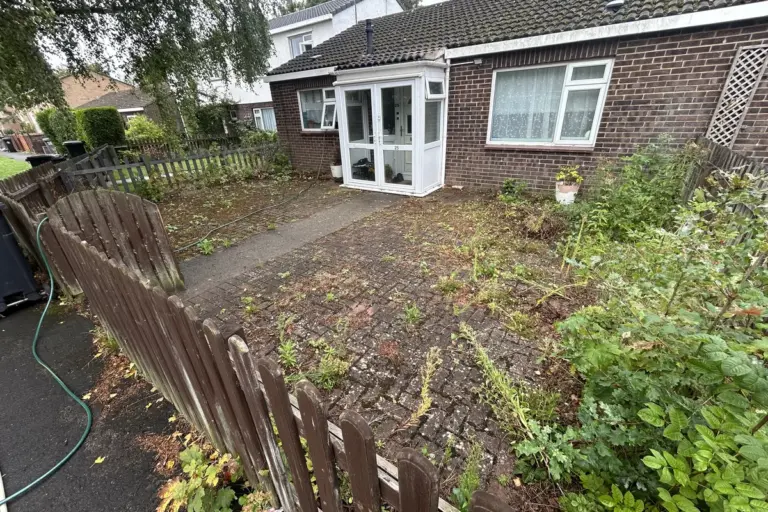
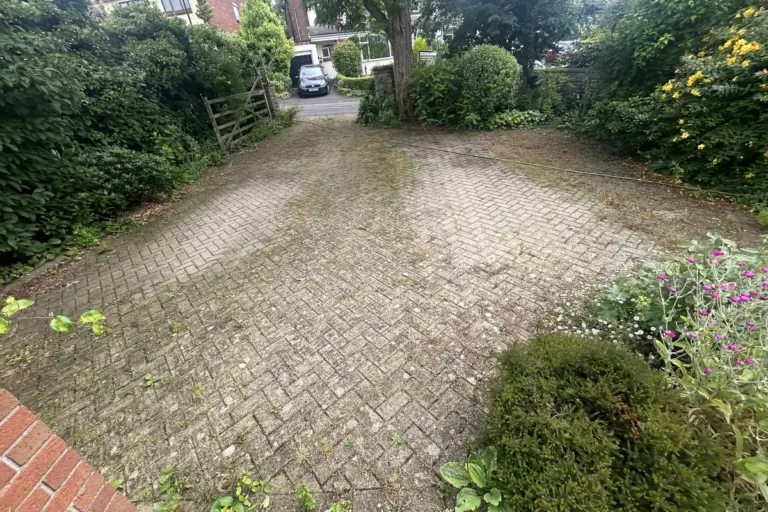
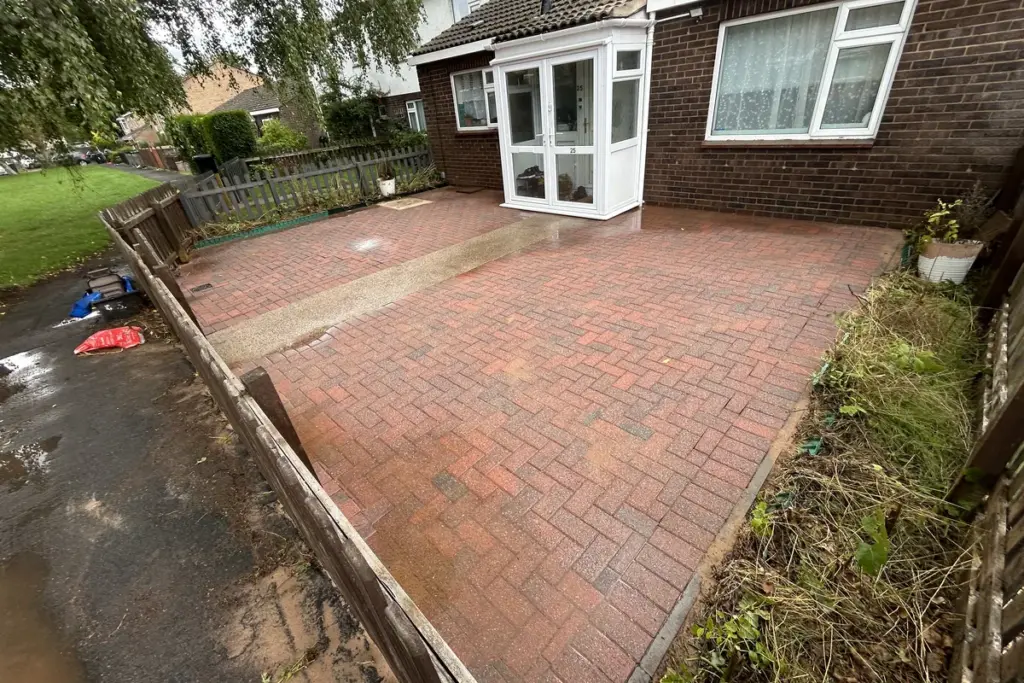
It is the right tool for surfaces that are hard enough to take it: block paving, concrete, tarmac, natural stone and brick paths. On a driveway full of weeds, like the one we restored in Stapleton, nothing else gets the roots and the old sand out of the joints.
For oil, grease and chewing gum we add heat. Our hot water and steam system runs at up to 150°C, which softens what cold water only pushes around.
What is soft washing?
Soft washing turns the idea around. The pressure is kept very low, about what you would get from a garden hose, and a specialist treatment is applied to the surface instead. The treatment kills the moss, algae, lichen and mildew at the root, and the surface then clears as the dead growth weathers away.
Because nothing is being blasted, there is no risk of stripping paint, cracking render or lifting tiles. The trade-off is patience: on a roof, for example, the full result appears gradually over 6 to 10 weeks.
Which surfaces need pressure washing?
- Block paving driveways, where weeds and moss root into the joints.
- Concrete and tarmac drives and paths.
- Stone and slab patios, with the pressure adjusted to the stone.
- Car parks, yards and forecourts.
- Heavily mossy roofs, where the moss has to come off before any treatment can work.
You can see what we clean this way on our pressure washing in Bristol page and our patio and driveway cleaning page.
Which surfaces need soft washing?
- Render. High pressure can crack render, force water behind it and leave visible lines. Render cleaning should always be a soft wash.
- Roofs that are not mossy yet but are just starting to turn green. A soft wash stops the growth before it becomes a moss problem.
- Painted surfaces, cladding and older, softer brick or stone that would mark under pressure.
Roofs: why it is not one or the other
Roofs are where people get confused, because both methods have a place. If a roof is covered in thick moss, the moss has to be removed first, by pressure washing or by scraping it off. Spraying a treatment over thick moss just means it falls off in pieces for weeks, into the gutters and over the garden.
Once the moss is gone, the roof gets an after-clean biocide treatment, which is the step that keeps it clean for years. And if the roof is only lightly green to begin with, a soft wash on its own is enough. We explain all three routes on our roof cleaning in Bristol page.
What goes wrong when the wrong method is used
- Pressure washing render can blow pieces off, leave tiger-stripe marks and let water in behind the surface.
- Too much pressure on a patio strips out the pointing and can scar soft stone such as sandstone.
- Pressure washing without re-sanding block paving leaves the joints empty, so the blocks loosen and the weeds return fast.
- Soft washing a weed-choked driveway kills the green but leaves roots, dirt and old sand exactly where they were.
None of this is the fault of the method. It is the fault of using it in the wrong place.
Is one more expensive than the other?
Not in any consistent way. The price of a job depends on the size of the area, the surface and what is growing on it, not on which label is attached to the method. A professional will choose the method to suit the surface, and often a single property needs both: pressure washing for the driveway and soft washing for the render.
How we decide which to use
We look at three things: what the surface is made of, what condition it is in, and what is growing on it. Hard and sound gets pressure. Soft, painted or rendered gets a soft wash. Anything with oil or grease gets heat. And almost everything gets a biocide treatment afterwards, because that is what slows the moss and algae from coming back.
If you are not sure what your home needs, send us a few photos. We will tell you which method suits each surface and give you a fixed price.
Thinking about your roof? The choice works a little differently up there. See roof soft washing vs roof pressure washing and how long a roof soft wash takes to work.
More driveway, patio and pressure washing guides
- Can pressure washing damage your driveway or patio?
- How to stop weeds growing in block paving
- Why has my sandstone patio turned black?
- How often should you clean your driveway and patio?
- DIY pressure washer vs professional pressure washing
Pressure washing and soft washing: frequently asked questions
What is the difference between pressure washing and soft washing?
Pressure washing cleans with high-pressure water and suits hard surfaces such as driveways and patios. Soft washing uses very low pressure and a specialist treatment that kills moss and algae, and suits render, roofs and delicate surfaces.
Is soft washing better than pressure washing?
Neither is better overall. Each is right for different surfaces. Hard surfaces need pressure washing, while render and many roofs need soft washing.
Can you pressure wash render?
It is not recommended. High pressure can crack render, leave marks and force water behind it. Render should be soft washed.
How long does soft washing take to work?
The treatment starts working straight away, but the full result often appears gradually. On a roof it typically takes 6 to 10 weeks.
Book pressure washing or soft washing in Bristol
The right method for every surface, from a DBS-checked, fully insured team.