You have a pressure washer in the garage, or you are thinking of buying one. So is it worth paying someone, or can you do it yourself? This is an honest look at DIY pressure washing vs professional pressure washing: what a home machine does well, where it falls short and when calling a professional is the better choice.
Tried it yourself and not happy with the result?
Send us a few photos. We will tell you what it needs and give you a fixed price.
The short answer: a home pressure washer is fine for light, regular upkeep of a small area. For a driveway or patio that has gone green or black, for oil and deep stains, or for anything delicate, a professional clean gives a deeper, more even and longer-lasting result, in a fraction of the time and without the risk of marking the surface.
What a DIY pressure washer does well
Let us be fair to the home machine. It is good at:
- Rinsing off light dirt and fresh green film before it builds up.
- Small jobs such as a short path, a few steps, garden furniture or the bins.
- Keeping a surface topped up between proper cleans.
If your patio was professionally cleaned last year and just needs a freshen-up, a careful go with a home machine can be perfectly reasonable.
Where DIY pressure washing falls short
1. It takes far longer than people expect
A domestic machine moves much less water than a professional one, and the lance cleans a strip only a few centimetres wide. A full driveway can swallow a whole weekend, and most people run out of patience long before they run out of driveway.
2. Stripes and patchy results
The classic sign of a DIY job is tiger stripes: lighter and darker lines where the lance passed at slightly different heights and speeds. They are very hard to even out afterwards, and they show most on concrete and natural stone.
3. Surface damage
To make up for the lower flow, it is tempting to use the narrowest nozzle and hold it close. That is exactly how block paving loses its top surface, soft stone gets etched and pointing is blown out. We explain how it happens in can pressure washing damage your driveway or patio?
4. Joints washed out and not refilled
Pressure washing block paving removes the jointing sand. If it is not replaced, the blocks loosen and weeds move straight in. Re-sanding is the step most DIY cleans skip. See how to stop weeds growing in block paving.
5. The growth comes straight back
Cold water under pressure removes what you can see. It does not kill the spores and roots left in the pores of the surface, so the green film returns within months. Without a treatment, you are only resetting the clock.
6. Some stains do not move at all
Oil, tyre marks, rust, black lichen and old paint mostly ignore a home pressure washer. They need the right product, heat or both. Our guide on how to get engine oil off a driveway covers one of the most common.
What is different about a professional clean
- Professional machines. We use professional Briggs & Stratton pressure washing machines, which deliver far more water than a domestic unit. It is the flow that does the cleaning and carries the dirt away, not just the pressure.
- Hot water and steam. Our equipment can clean with hot water and steam at up to 150°C. Heat lifts oil, grease and ingrained dirt that cold water leaves behind, and it kills growth on contact.
- The right method for each surface. Pressure is matched to the material, and delicate surfaces are soft washed instead. Here is the difference between pressure washing and soft washing.
- Treatment, not just a rinse. A biocide treatment kills the spores left behind, so the surface stays clean for longer.
- Finishing work. Block paving is re-sanded, including with polymeric sand where it is the right choice, and failed pointing can be replaced.
- Experience. After more than 11 years, we know how each surface behaves and where it can go wrong.
A real example from Stapleton
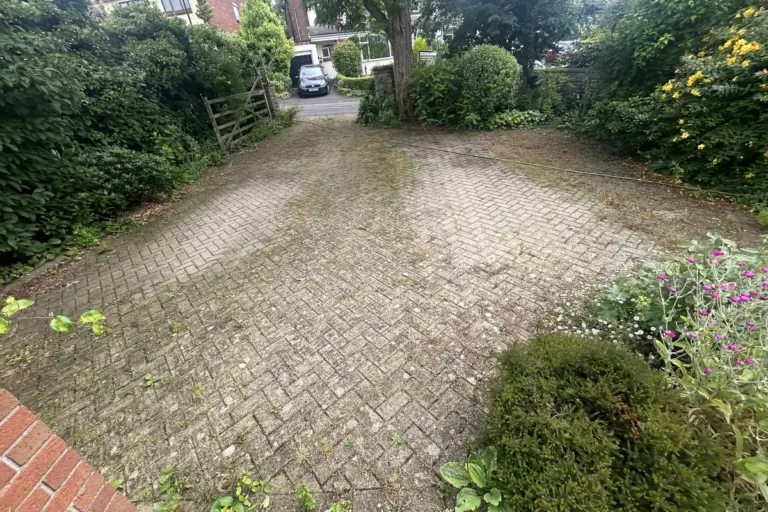
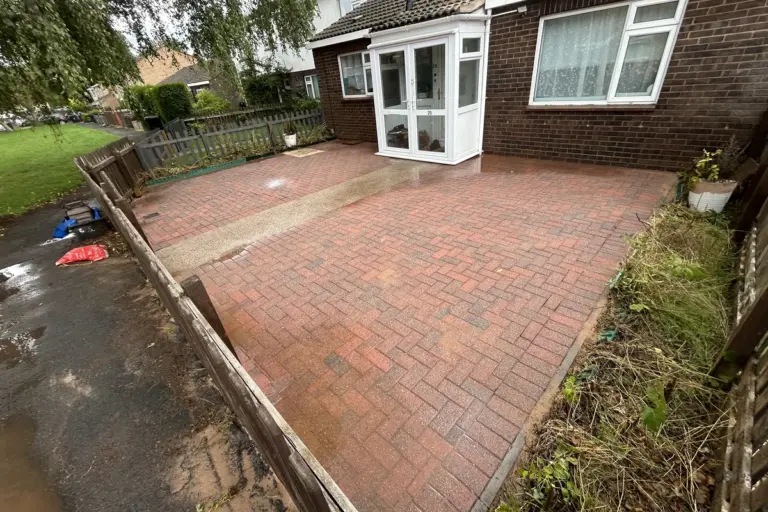
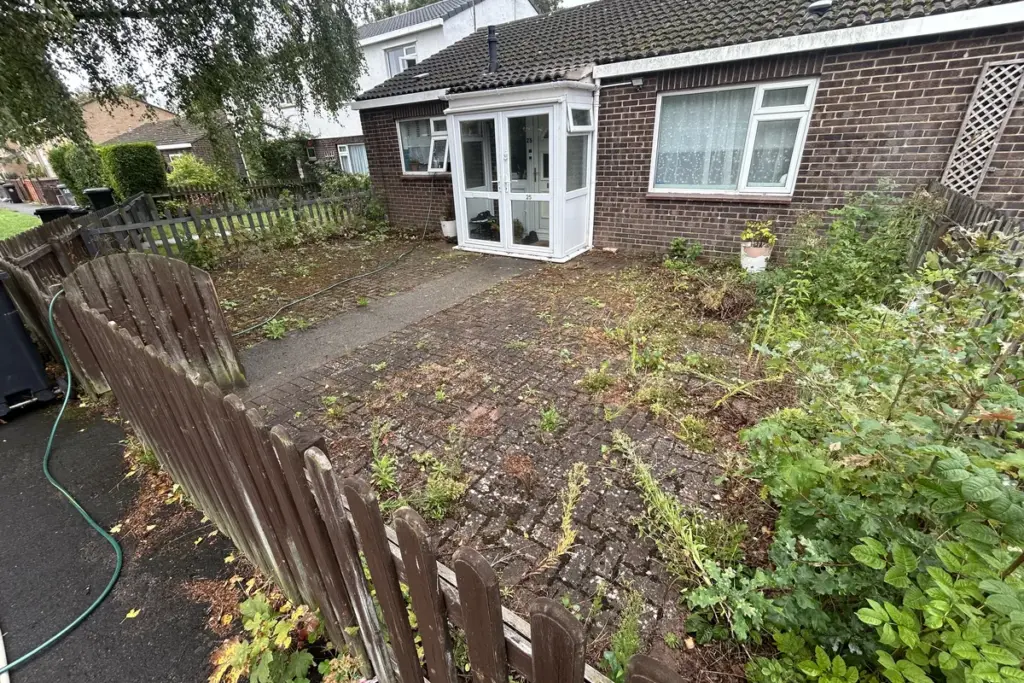
One of our customers in Stapleton, Bristol tried to clean their paving themselves with a DIY cleaner before calling us. It made very little difference, and they were ready to believe the surface was past saving. It was not. A professional clean brought it back, and you can see the before and after photos on our driveway cleaning in Bristol page.
It is a pattern we see a lot. The surface is rarely the problem. The method is.
DIY vs professional at a glance
- Time: DIY can take a weekend. A professional team usually finishes a typical driveway or patio in a day.
- Finish: DIY often leaves stripes and patches. A professional clean is even across the whole surface.
- Stains: DIY shifts light dirt. Professional heat and products deal with oil, lichen and deep staining.
- How long it lasts: without treatment, growth returns in months. With a biocide treatment, the result lasts much longer.
- Risk: with DIY, any damage is yours to fix. A professional company is insured and knows how to avoid it.
- Joints: DIY usually leaves them empty. A professional clean includes re-sanding or repointing where needed.
So which should you choose?
Do it yourself if the area is small, the dirt is light and the surface is tough. Use a wide fan nozzle, keep your distance and keep the lance moving.
Call a professional if the surface has gone green or black, if it is slippery, if there is oil or staining, if it is natural stone, old block paving or anything you are worried about damaging, or if you simply want your weekend back.
Many of our customers do both: a professional clean every one to two years, and a light sweep and rinse in between. Here is how often you should clean your driveway and patio.
Find out more about our pressure washing in Bristol, or send us a few photos for a fixed price. If you would be wasting your money on us, we will tell you that as well.
More driveway, patio and pressure washing guides
- Pressure washing vs soft washing: what is the difference?
- Can pressure washing damage your driveway or patio?
- How to stop weeds growing in block paving
- Why has my sandstone patio turned black?
- How often should you clean your driveway and patio?
DIY vs professional pressure washing: FAQs
Is it worth paying for professional pressure washing?
For a driveway or patio that has gone green or black, or has oil and deep stains, yes. A professional clean is faster, more even, treats the regrowth and avoids damage to the surface.
Can I pressure wash my own driveway?
Yes, for light dirt on a tough surface. Use a wide fan nozzle, keep your distance and keep the lance moving. Re-sand block paving afterwards.
Why does my driveway look stripy after pressure washing?
Stripes appear when the lance passes at different heights and speeds. They are common with domestic machines and narrow nozzles, and show most on concrete and stone.
What do professionals use that a home pressure washer does not?
Professional machines with far higher water flow, hot water and steam, biocide treatments that slow regrowth, and finishing work such as re-sanding and repointing.
Get your weekend back
Professional pressure washing across Bristol, with hot water, steam and treatment.