It is one of the questions we are asked most: how often should you clean your driveway and patio? Clean too rarely and the job gets bigger every year. The honest answer depends on your surface, how much shade it gets and what is growing nearby. Here is how to work it out for your own home.
Not sure if yours is due?
Send us a couple of photos and we will tell you honestly, with a fixed price if it is.
The short answer: most driveways and patios in Bristol are best cleaned every one to two years. Shaded, north-facing or tree-covered areas usually need it every year. Open, sunny surfaces that drain well can often go two years. Leave it much longer and the job becomes a restoration instead of a clean.
Why there is no single answer
Two driveways on the same street can need cleaning at completely different times. What decides it is not the calendar, it is how quickly growth and dirt build up on your particular surface. The main things that speed it up are:
- Shade. Surfaces that rarely see the sun stay damp, and damp is what algae, moss and lichen need.
- Trees and hedges. They drop leaves, sap, seeds and spores, and keep the area wet for longer.
- Drainage. Anywhere water sits will turn green first.
- The surface itself. Porous stone such as sandstone holds more moisture than a dense, smooth surface.
- How it is used. A driveway with cars on it every day collects tyre marks and oil. A patio used for barbecues collects grease and food stains.
How often to clean each type of surface
Block paving
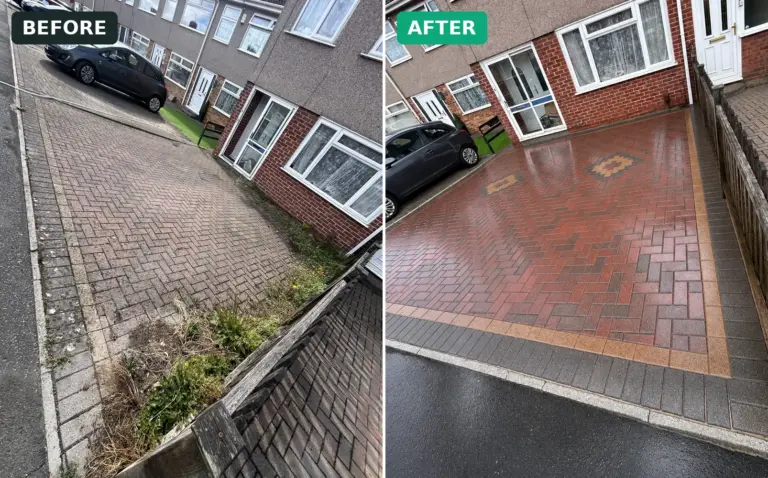
Every one to two years. Block paving has hundreds of joints, and every joint is somewhere for weeds and moss to take hold. Regular cleaning, followed by re-sanding, keeps the joints full and the blocks locked together. We cover that in detail in how to stop weeds growing in block paving.
Sandstone and natural stone patios
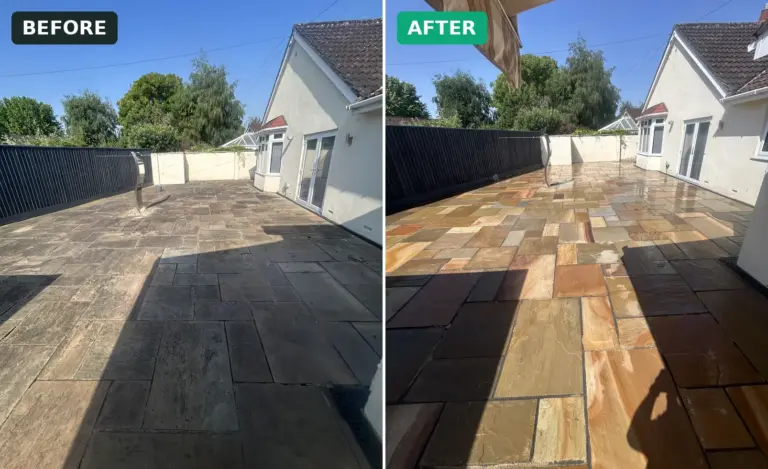
Every one to two years, and yearly if the patio is shaded. Natural stone is porous, so algae and black lichen root into it. Caught early, they come off easily. Left for years, they turn the whole patio dark, which is the subject of why has my sandstone patio turned black?
Concrete and tarmac driveways
Roughly every two years for most homes, sooner if the drive is shaded or picks up oil. Tarmac needs a gentler approach than concrete, because too much pressure loosens the surface.
Paths and steps
These are worth doing yearly. They are usually narrow, often shaded, and they are where a slippery surface matters most.
Signs it is time, whatever the calendar says
- The surface is slippery when wet.
- You can see a green film, especially along edges and in shaded corners.
- Black spots are appearing on stone.
- Weeds or moss are growing in the joints.
- The colour looks dull and flat compared with how you remember it.
- Water sits on the surface instead of running off.
The first one is the one not to ignore. Algae on paving is a real slip risk, particularly for children and older relatives.
What happens if you leave it too long
Nothing dramatic, at first. The surface just gets a little darker each year. The trouble is what goes on underneath.
- Growth roots deeper. Black lichen and moss work into the pores and joints, and take far more work to remove.
- Joints fail. Weed and moss roots push the sand out of block paving and break up pointing between slabs. Once the joints open, water gets underneath and blocks start to move.
- Stains set. Oil, rust and leaf stains are far easier to lift when they are fresh.
- The clean takes longer. A surface that is maintained cleans quickly. One that has been left for ten years is a bigger job, and often needs re-sanding or repointing afterwards.
What our regular customers do
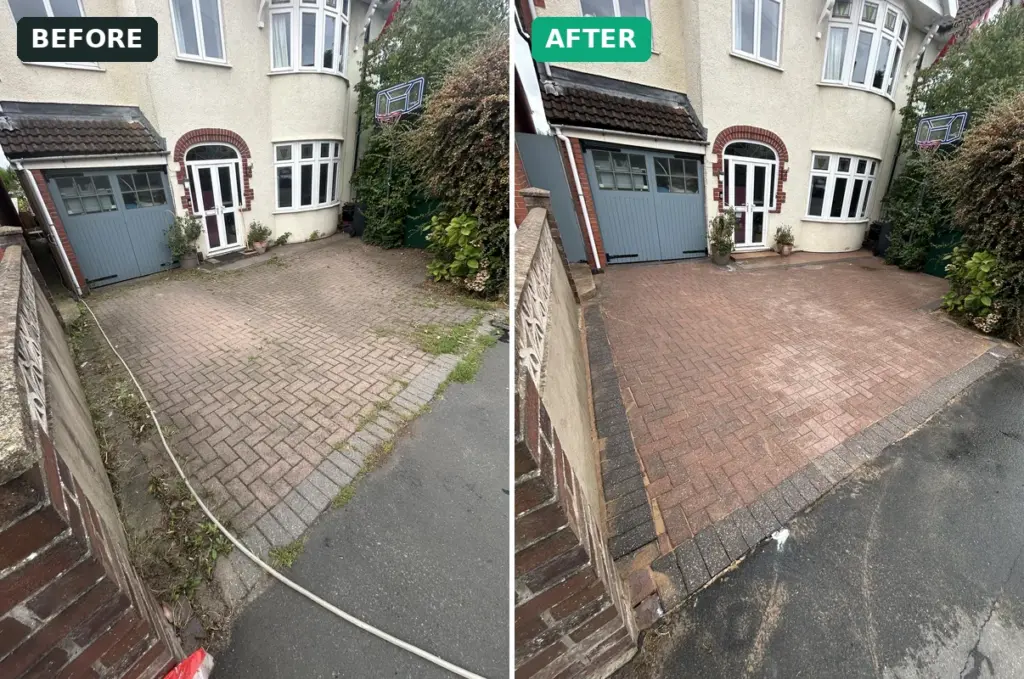
The driveways and patios that always look good are rarely the newest ones. They are the ones that never get the chance to get bad. One of our customers in Bishopston, Bristol has their driveway and patio cleaned every one to two years. Because the growth never gets established, each visit is quicker, the joints stay sound and the surface looks cared for all year, not just in the week after a clean.
The best time of year to do it
Spring is the most popular, because winter has done its worst and people want the garden ready for summer. Autumn is the other good moment, once the leaves have dropped, so the surface is clean and safe going into the wet months. In truth, a driveway or patio can be cleaned at almost any time of year. It is better to have it done when it needs it than to wait for the perfect month.
How to make each clean last longer
- Sweep regularly, especially leaves in autumn.
- Deal with weeds early, before they seed.
- Clean up oil and spills quickly.
- Cut back plants that keep the surface in shade.
- Keep joints full, with sand on block paving and sound pointing on slabs.
- Choose a clean that includes a treatment. Pressure alone removes what you can see. A biocide treatment deals with the spores you cannot, which slows the regrowth.
If you are tempted to do the in-between cleans yourself, read can pressure washing damage your driveway or patio? first.
Book it with your gutters and save
If the driveway or patio is due, the gutters often are too. If you decide that you also need your gutters cleaned, please let us know when you book, so that we arrive with all the necessary tools. We will give you 50% off gutter cleaning alongside your driveway cleaning. Take your chance and let us know.
See real before and after results on our driveway cleaning in Bristol page, or everything we clean on our pressure washing page. Not sure whether yours is due? Send us a couple of photos and we will tell you honestly.
More driveway, patio and pressure washing guides
- Pressure washing vs soft washing: what is the difference?
- Can pressure washing damage your driveway or patio?
- How to stop weeds growing in block paving
- Why has my sandstone patio turned black?
- DIY pressure washer vs professional pressure washing
Driveway and patio cleaning: how often? FAQs
How often should a driveway be cleaned?
Most driveways are best cleaned every one to two years. Shaded driveways, or those under trees, usually need cleaning every year.
How often should a patio be pressure washed?
Every one to two years for most patios. Natural stone such as sandstone, and patios in shade, benefit from a yearly clean to stop algae and black lichen rooting in.
What is the best time of year to clean a driveway or patio?
Spring and autumn are the most popular, but a driveway or patio can be cleaned at almost any time of year. It is better to clean it when it needs it than to wait.
Is it bad to leave a driveway uncleaned for years?
Yes. Moss, weeds and lichen root deeper, joints and pointing fail, and stains set. The eventual clean is a bigger job and often needs re-sanding or repointing.
Keep your driveway and patio looking good all year
Professional cleaning, treatment and re-sanding across Bristol.