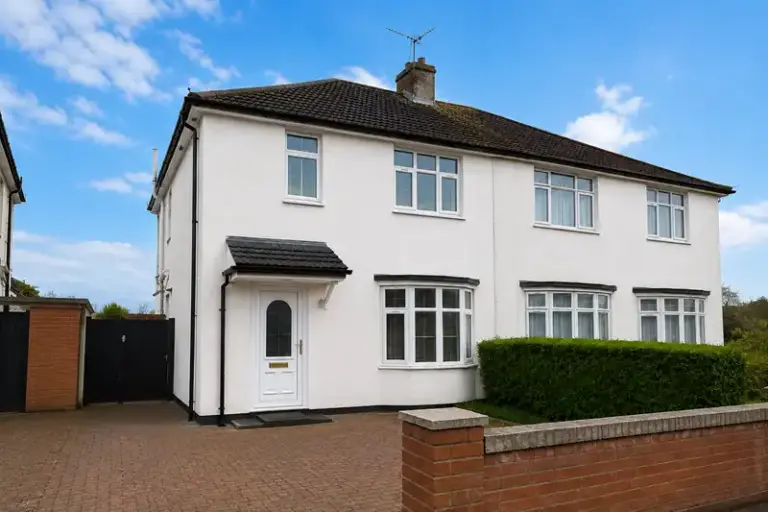
You had the house rendered not long ago, and it is already turning green. So why does new render go green so quickly, and is there anything that stops it? There is, and it explains why render that we have cleaned and treated stays clean for longer than it did when it was brand new.
New render already turning green?
Send us a few photos and we will tell you what it needs.
The short answer: new render goes green quickly because it has little or no lasting protection against algae and mildew. Rain, humidity and shade do the rest, often within months. After we clean render, we leave a final treatment in it that is absorbed into the surface and keeps working for years, which is why treated render stays clean for longer than it did when it was new.
Why brand new render turns green
It is one of the most frustrating things a homeowner can see. The render went on a few months ago, it cost good money, and one wall already has a green tint.
The reason is simple. Many renders contain little or no biocide, the ingredient that stops algae, mildew and organic dirt from growing on a surface. Some modern renders do include one, but it is gradually washed out by the rain. Either way, the result is the same: before long, the surface has nothing in it to stop growth from taking hold.
Algae spores are in the air all the time. They only need a damp surface to settle on, and render, with its fine texture, gives them exactly that.
What speeds it up
- Rain. The more often a wall is wet, the faster growth appears.
- Humidity. Damp air keeps the surface from drying out fully.
- Shade. Walls that see little sun stay damp for longer.
- A tree or hedge nearby. It shades the wall and supplies a steady stream of spores.
That is why most rendered walls, sooner or later, turn green, and why it is usually one or two walls first, not the whole house. It is not a sign that the render was badly applied. It is what happens to an unprotected surface in a wet climate, and it happens to K Rend, monocouche and silicone render alike.
Cleaning alone is only half the answer
If render is simply washed, it looks clean on the day, but it is back where it started: a clean surface with no protection. The same rain, the same shade and the same tree will turn it green again.
That is why our render cleaning does not stop at the clean.
The final treatment that stays in the render
Once the render has been soft washed and is clean, we apply a final treatment and leave it on the wall. It is not rinsed off. Over the following hours it is absorbed into the render itself.
- It is compatible with render. There is no risk to the render or to the quality of the finish.
- It stays in the render. Because it is absorbed into the surface and not just sitting on top, it is not simply washed away by the next shower.
- Moisture keeps it active. The humidity in the air is enough to keep the treatment working, all year round.
- It stops growth for years. Algae, lichen, mildew and organic dirt cannot take hold on the treated surface.
In other words, the very thing that made the render go green in the first place, moisture, is now what keeps the protection working.
Why treated render stays clean for longer than new render
This surprises people, but it follows from everything above. When your render was new, it had little or nothing in it to resist growth. After our treatment, it does.
So a wall that turned green within months of being applied can stay clean for years after it has been cleaned and treated. You are not just getting the render back to how it looked on day one. You are getting it back with the protection it never had.
It is the same thinking behind our roof soft wash, where rain reactivates the treatment instead of washing it away. We explain that in how long does a roof soft wash take to work?
Can new render be treated before it turns green?
Yes. Most people only think about their render once it has already changed colour, so it is not something we are asked for often. But the same treatment can be applied as a preventive measure to clean, new render, before any growth appears. It is absorbed into the render in the same way and protects it from the start, so the wall never reaches the green stage. If you have just had your home rendered, it is worth asking us about.
What you should not do
Please do not take a pressure washer to green render. High pressure can mark and erode the finish and force water into the wall, and it leaves the spores behind, so the green returns even faster. We go through the risks in can you pressure wash render?
Is it only green you need to worry about?
No. Red and orange patches and black streaks are caused by the same kind of organic growth and are treated the same way. See why is my render turning green, red or black?
How to help the treatment last
- Keep your gutters clear, so water is not pouring down the wall.
- Fix drips from overflow pipes and leaking joints.
- Cut back plants that press against the wall or keep it in deep shade.
If you decide that you also need your gutters cleaned, please let us know when you book, so that we arrive with all the necessary tools. We will give you 50% off gutter cleaning alongside your render cleaning. Take your chance and let us know.
See real before and after results on our render cleaning in Bristol page. If your render has gone green, whether it is ten years old or ten months old, send us a few photos and we will tell you what it needs.
More render cleaning guides
- Render cleaning cost: what affects the price?
- K Rend cleaning: how to remove green algae from K Rend safely
- How to clean render on a house: what works and what to avoid
- Soft wash render cleaning: how it works and why it lasts
- How to clean pebble dash and roughcast walls
- Best render cleaner: shop-bought products vs professional soft washing
- Why is my render turning green, red or black?
- Can you pressure wash render?
New render going green: FAQs
Why has my new render gone green?
Many renders contain little or no biocide, and where one is included it is washed out by rain over time. With nothing to stop them, algae and mildew grow on damp, shaded walls within months.
How do you stop render going green?
After cleaning, a final treatment is left on the render and absorbed into it. It stays in the surface, is kept active by moisture and stops algae, lichen and mildew for years.
Is the treatment safe for my render?
Yes. The treatment is compatible with render, so there is no risk to the render or to the quality of the finish.
Why does treated render stay cleaner than new render?
New render has little or no lasting protection against organic growth. Cleaned and treated render has that protection absorbed into its surface.
Render cleaning in Bristol that lasts
Soft washing plus a final treatment that stays in the render. 50% off gutter cleaning.