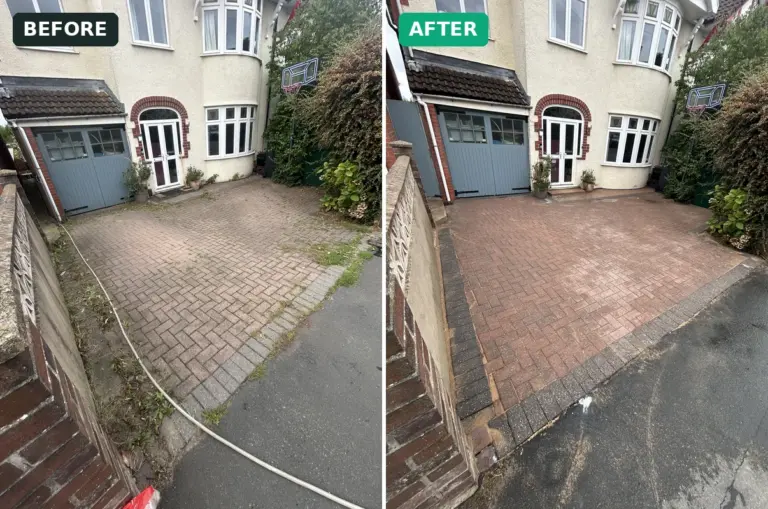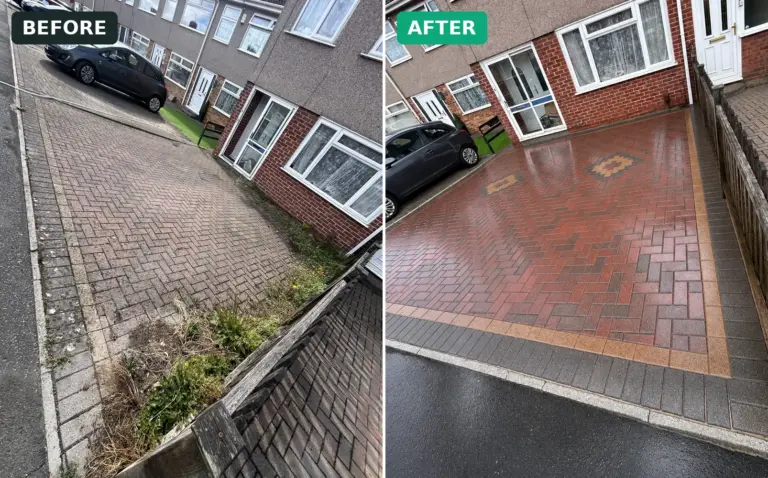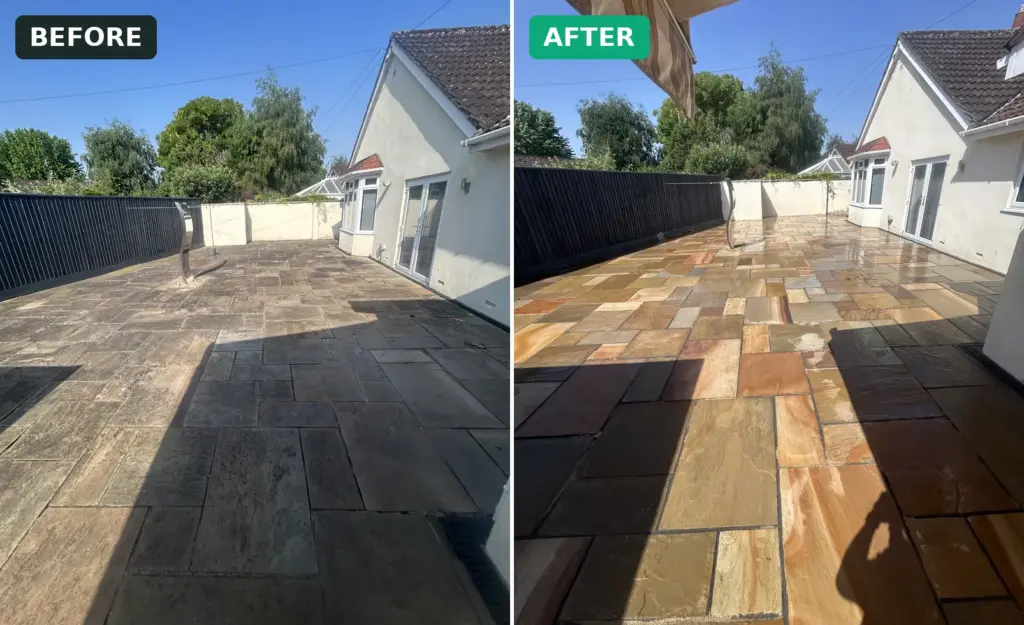
It was a warm, golden patio when it was laid. Now it is dark, slippery and looks years older than it is. If you are wondering why your sandstone patio has turned black, and whether it can be saved, the answer is reassuring: the stone is almost certainly fine. It is what is growing on it that needs dealing with.
Patio turned black? It can almost certainly be saved.
Send us a few photos and we will tell you what it needs and what it will cost.
The short answer: a sandstone patio turns black because of algae, mildew and black lichen growing in the pores of the stone, helped along by shade, damp and time. It is living growth, not dirt, which is why scrubbing and shop-bought patio cleaners barely touch it. It needs a treatment that kills the growth at the root.
What the black actually is
Sandstone is a natural, porous stone. That is what gives it its warm colours, and it is also what makes it such a comfortable home for things that grow. The black you are looking at is usually a mix of three:
- Algae. Green at first, then darker as it thickens. It makes the surface slippery when wet.
- Mildew and mould. A dark film that spreads across damp, shaded areas.
- Black lichen, often called black spot. It starts as small dark dots and slowly joins up. Its roots grow down into the pores of the stone, which is why it is by far the hardest to shift.
On top of that sits ordinary dirt, soot and leaf stain. Together they can turn a golden patio almost completely black within a few years, so gradually that you stop noticing until you see an old photo.
Why it happens to some patios faster than others
- Shade. North-facing patios and areas under trees stay damp for longer.
- Poor drainage. Where water sits, growth follows.
- Overhanging plants and trees, which drop spores, sap and leaves.
- Lighter stone. Pale sandstone shows it sooner and more starkly.
- Time since it was last cleaned. The longer growth is left, the deeper it roots.
The mild, wet winters we get in Bristol are close to ideal conditions for all of it.
Why DIY patio cleaners often fail
We hear the same story again and again. A customer buys a bottle of patio cleaner, follows the instructions, scrubs for an afternoon and ends up with a patio that is slightly less green and exactly as black. They assume the stone is ruined. It is not.
Off-the-shelf products are made to be safe for anyone to use, so they are mild. They can shift surface algae, but growth that has been forming for years lives deep in the pores, below where a mild product reaches. Black lichen in particular simply shrugs it off.
That is exactly what happened on a large sandstone patio we restored in Bitton, Bristol. The owner had tried a DIY cleaner first, was very disappointed with the result and called us afterwards. Under the black film was the original stone: golds, buffs, pinks and greys.
Why a pressure washer alone is not the answer either
A pressure washer will take off the surface layer and the patio will look far better on the day. But sandstone is soft. The pressure needed to blast lichen roots out of the pores is enough to roughen the face of the stone and strip the pointing, and a rougher surface holds dirt and growth more readily next time. We explain the risks in can pressure washing damage your driveway or patio?
Blasting also leaves the roots and spores alive in the stone, so the black returns within months.
What actually works on black sandstone
The lasting fix treats the cause, which is the growth, instead of the symptom, which is the colour.
- A professional cleaning treatment is applied to kill the algae, mildew and lichen at the root, inside the pores.
- The patio is cleaned with the pressure matched to the stone, so the dead growth and dirt come away without damaging the surface.
- The joints are dealt with. Failed pointing is replaced. On the Bitton patio we carried out a full repoint the next day with a professional jointing compound.
- The stone is left treated, which slows the growth from returning.
It is the same principle as the difference between pressure washing and soft washing: let the treatment do the work that force should not.
Can black spot be removed completely?
In most cases, yes. Very old, deep black lichen can leave faint shadow marks where the roots were, and these often fade further over the following weeks as the treatment continues to work. What matters is that the stone looks like sandstone again instead of slate.
How to stop a sandstone patio turning black again
- Sweep it regularly so leaves and debris do not sit and rot on the surface.
- Cut back overhanging plants to let light and air reach the stone.
- Sort out puddles. Areas that hold water will always go first.
- Keep the pointing sound, so water drains off instead of soaking in at the joints.
- Have it cleaned before it gets bad. A patio cleaned every one to two years never reaches the deep-rooted stage, and each clean is quicker.
Is the stone damaged for good?
Almost never. Black sandstone looks alarming, but the stone underneath is nearly always sound. The colour change is on and in the surface, not through the slab. Before you think about replacing a patio, have it cleaned properly. The difference is usually far bigger than people expect.
You can see the Bitton patio, before and after, on our patio and driveway cleaning page, and everything else we clean on our pressure washing in Bristol page. Send us a few photos of your patio and we will tell you what it needs, with a fixed price.
More driveway, patio and pressure washing guides
- Pressure washing vs soft washing: what is the difference?
- Can pressure washing damage your driveway or patio?
- How to stop weeds growing in block paving
- How often should you clean your driveway and patio?
- DIY pressure washer vs professional pressure washing
Black sandstone patios: frequently asked questions
Why has my sandstone patio gone black?
The black is living growth: algae, mildew and black lichen rooted in the pores of the stone, usually in damp or shaded areas. It builds up gradually over several years.
What removes black spots from sandstone?
A professional cleaning treatment that kills the lichen at the root, followed by a careful clean. Mild shop-bought patio cleaners rarely reach deep enough to remove black lichen.
Can you pressure wash black algae off sandstone?
A pressure washer removes the surface layer but can roughen soft sandstone and leaves the roots behind, so the black returns. Treatment plus a careful clean gives a longer-lasting result.
Will the black come back after cleaning?
Eventually, in damp or shaded areas. Regular sweeping, good drainage and a clean every one to two years keep it from building up again.
Bring your sandstone patio back to its real colour
Professional treatment, careful cleaning and repointing where needed.