You pull them out, they come back. You spray them, they come back. A few weeks of rain and your driveway looks like a lawn with bricks in it. If you are tired of fighting weeds in block paving, the reason nothing has worked is that you have been treating the weeds instead of the place they grow. Here is how to stop them properly.
Driveway taken over by weeds?
We clear the joints properly and re-sand with a weed-inhibiting polymeric sand, in a single visit.
The short answer: weeds in block paving grow in the joints, not through the blocks. To stop them, remove the weeds and the old contaminated sand completely, then refill every joint with a weed-inhibiting polymeric jointing sand that sets hard. Clean joints that stay full give seeds nowhere to root.
Why weeds grow in block paving in the first place
It is a common belief that weeds push up from the ground underneath. They almost never do. A properly laid block paved driveway sits on a compacted base that very little can grow through.
What actually happens is simpler. Seeds blow in and land on the surface. Over the years the sand in the joints fills with dust, soil and rotted leaves, which turns it into a thin strip of compost. Add rain and a seed has everything it needs. The weeds you see are growing from the top down, rooted in the joint.
That is good news, because it means the problem can be fixed from the top as well.
What does not work for long
Pulling them out by hand
Satisfying, but the roots snap off in the joint and regrow, and the compost they were growing in is still there.
Weedkiller
It kills what is there and leaves brown, dead weeds standing in the same dirty joints. Within a season new seeds have moved in. You are treating the plant, not the cause.
Boiling water, salt and vinegar
These scorch the leaves and do little for the roots. Salt can also stain paving and harm nearby planting. They buy you a few weeks.
Pressure washing on its own
A pressure wash removes the weeds and the dirty sand beautifully. But if you stop there, the joints are left empty. Empty joints fill with fresh dirt even faster, and the blocks start to loosen. We cover this in can pressure washing damage your driveway or patio?
What actually works: a three-step fix
Step 1: clear the joints completely
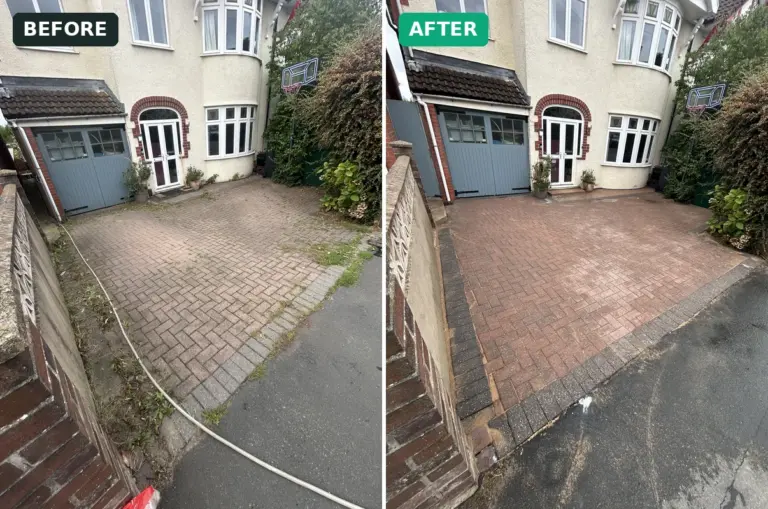
Everything has to come out: weeds, roots, moss and the old sand they were growing in. On a badly overgrown driveway this takes professional pressure washing equipment. A driveway we restored in Stapleton, Bristol had been taken over so thoroughly that a domestic washer would have needed days to get through it.
Step 2: let the paving dry
Jointing sand has to go into dry joints. Brush it into damp ones and it clumps at the top instead of filling the full depth, which leaves a hollow underneath.
Step 3: refill with weed-inhibiting polymeric sand
This is the step that makes the difference. Ordinary kiln-dried sand fills the joint but does nothing to stop seeds, and it washes out again in heavy rain. A polymeric jointing sand is different in three ways:
- It sets. Binding agents in the sand harden after contact with water, so it stays in the joint instead of washing away.
- It discourages weeds. The sand we use, a Dansand polymeric kiln-dried sand, contains natural minerals with a high pH that create dry, desert-like conditions where seeds struggle to take root.
- It locks the blocks. Fully filled, firm joints stop the paving from shifting, sinking or rocking under the weight of a car.
It also stays slightly flexible, so it copes with frost and small ground movement without cracking, and it gives ants far less to dig out.
A real example from Bristol
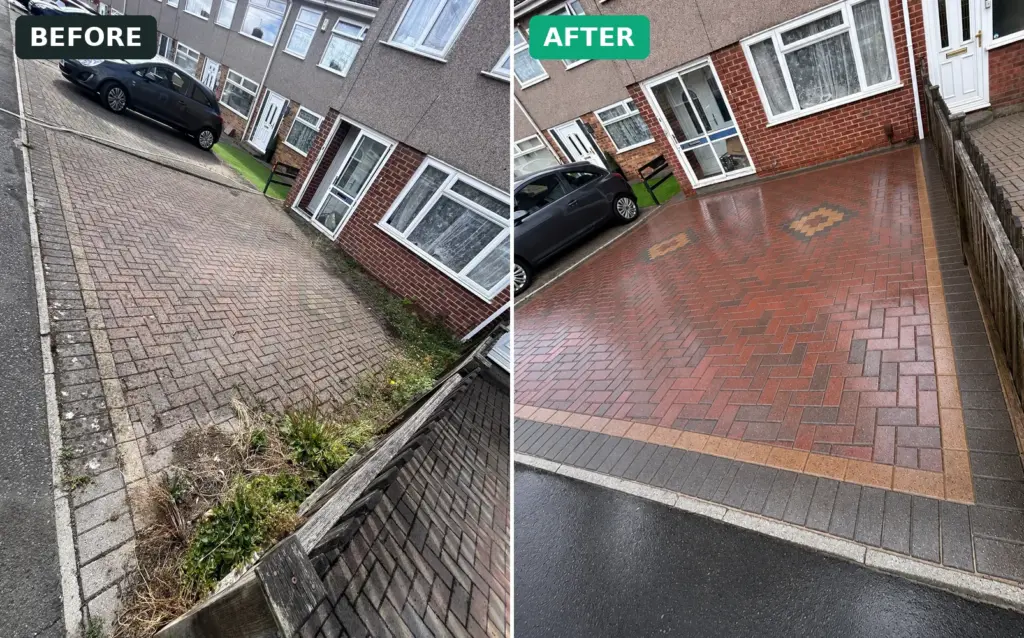
On a block paved driveway in St George, the pattern had almost vanished under weeds, moss and dirt. We removed the growth, deep cleaned the whole surface and then re-sanded every joint with Dansand polymeric sand. The red blocks, buff border and diamond features came straight back, and the joints are now full and firm instead of being a seedbed. The before and after photos are on our driveway cleaning in Bristol page.
How to keep weeds away afterwards
- Sweep regularly. Most weed growth starts with debris sitting on the surface. A stiff brush every few weeks removes the seeds and the dirt they need.
- Clear leaves in autumn before they rot down into the joints.
- Deal with the first weed. One is easy. A hundred means the joints have filled with soil again.
- Top up low joints if you notice any that have sunk.
- Have it professionally cleaned when it needs it. Many of our customers book every one to two years, which keeps the paving ahead of the weeds instead of behind them.
Will weeds ever come back?
Honestly, yes, eventually. No sand makes a driveway weed-proof for life. Seeds will always blow in, and over time new dirt settles on top of even the best joint. What the right jointing sand does is change the timescale and the effort: instead of a driveway that greens over every summer, you get one that stays clean with an occasional sweep.
Should you do it yourself?
On a small, lightly weeded area you can: clear the joints, let everything dry fully and brush in a polymeric sand following the instructions on the bag. On a full driveway, or one that is heavily overgrown, the clearing stage is where DIY usually falls short, and sand brushed over half-cleared joints will not last.
If you would like it done properly in a single visit, our pressure washing service in Bristol includes re-sanding on request, and we will give you a fixed price from a few photos.
More driveway, patio and pressure washing guides
- Pressure washing vs soft washing: what is the difference?
- Can pressure washing damage your driveway or patio?
- Why has my sandstone patio turned black?
- How often should you clean your driveway and patio?
- DIY pressure washer vs professional pressure washing
Weeds in block paving: frequently asked questions
What is the best way to stop weeds in block paving?
Remove the weeds and old sand from the joints completely, let the paving dry, then refill the joints with a weed-inhibiting polymeric jointing sand that sets hard.
Does kiln-dried sand stop weeds?
Ordinary kiln-dried sand fills the joints but does not stop weeds and washes out over time. Polymeric jointing sand sets in place and contains minerals that discourage weed growth.
Do weeds grow up through block paving?
Very rarely. Almost all weeds in block paving grow from seeds that land on the surface and root in the dirt that collects in the joints.
How long does polymeric sand keep weeds away?
It greatly slows weed growth, but no sand is weed-proof for life. Regular sweeping and a professional clean every one to two years keep the joints clean.
Get your block paving cleaned and re-sanded
Send us a few photos for a fixed price.