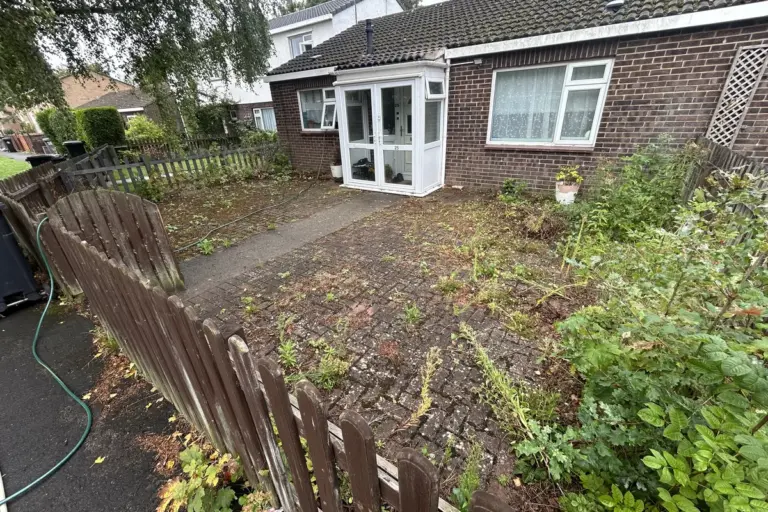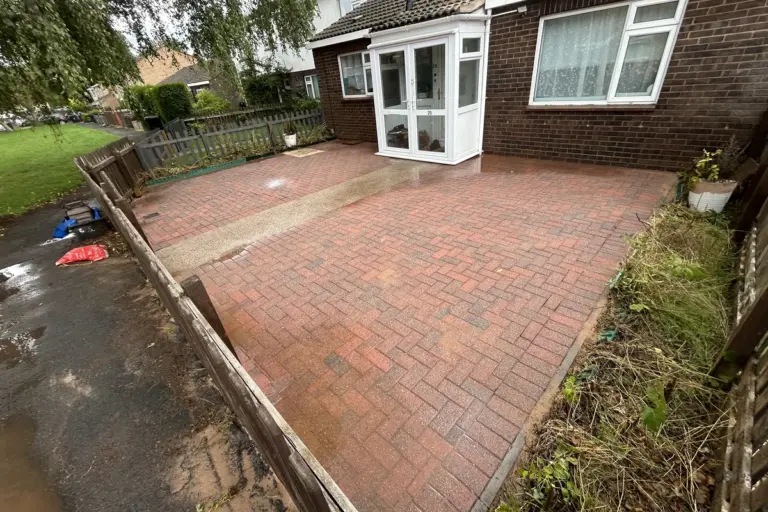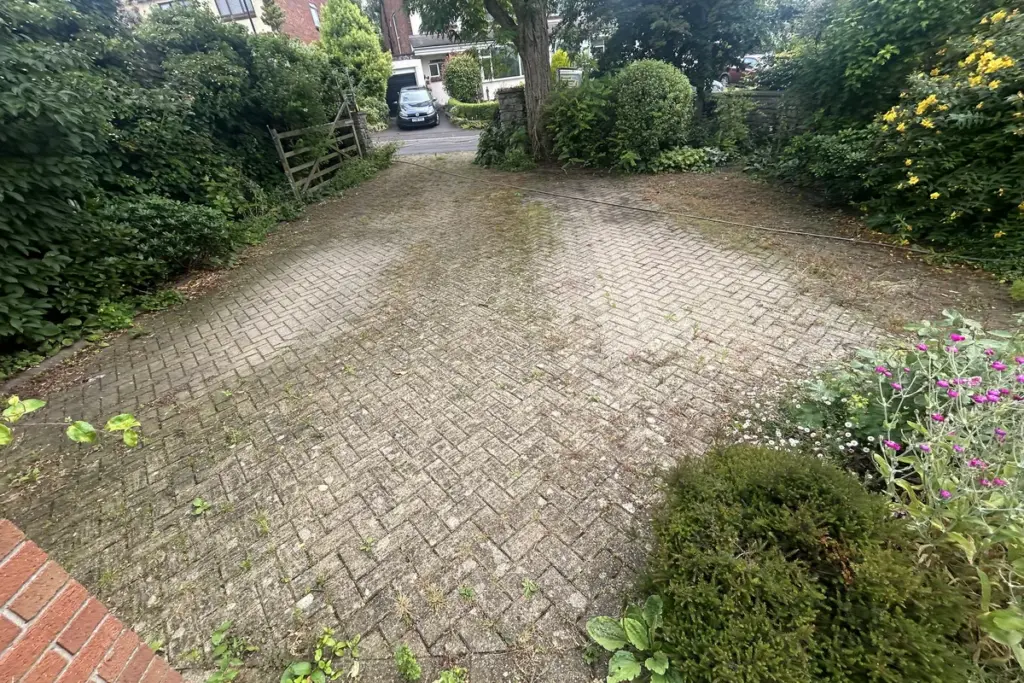
It is a fair question. You have seen the videos of dirt peeling away in clean stripes, and you have also heard of patios left scarred and driveways with the sand blown out. So can pressure washing damage a driveway or patio? Yes, it can. But the machine is rarely the problem. How it is used is.
Want your driveway or patio cleaned without the risk?
We match the pressure to your surface and finish the job with re-sanding or repointing where it is needed.
The short answer: pressure washing does not damage a sound driveway or patio when the pressure, the nozzle and the distance are right for the surface. The damage people worry about (etched lines, missing pointing, loose blocks, scarred stone) comes from too much pressure held too close, and from skipping the steps that should follow the clean.
How pressure washing can cause damage
A pressure washer concentrates a lot of force into a very small area. Point a narrow jet at one spot from a few centimetres away and it will cut into almost anything softer than granite. Most damage comes from the same handful of mistakes:
- A pencil-thin jet instead of a fan. It leaves visible stripes, sometimes called tiger striping, that do not wash out.
- Working too close. The nearer the nozzle, the harder the hit.
- Staying in one place. Trying to shift a stubborn stain by hovering over it etches the surface around the stain.
- One pressure for everything. What suits concrete is far too much for sandstone or old pointing.
The risk for each type of surface
Block paving
The blocks themselves are tough. The weak point is the sand between them. Pressure washing lifts that sand out, along with the weeds, which is exactly what you want. But if the joints are then left empty, the blocks lose the support that locks them together. They start to rock, the edges chip and weeds move straight back in. With block paving, the damage is rarely the washing. It is the failure to re-sand afterwards.
Natural stone and sandstone
Indian sandstone and limestone are softer than they look. Too much pressure roughens the face of the stone, which makes it hold dirt more easily next time, and it can blow out pointing that has already started to weaken. Stone patios need lower pressure and, where the staining is deep, a treatment to do the heavy lifting.
Concrete and imprinted concrete
Plain concrete copes well. Imprinted and coloured concrete has a sealed surface layer, and an aggressive jet can lift that seal and leave pale patches.
Tarmac
Older tarmac that has started to dry out and loosen can shed stones under high pressure. It needs a wide fan and a gentle hand.
Pointing and joints
On any paved area, the mortar between the slabs is the first thing to go. If it is already cracked or crumbling, a clean will show it up. That is not damage caused on the day so much as damage revealed, but it does mean repointing should be part of the plan.
Signs a driveway or patio has been cleaned badly
- Lines or swirls that stay visible once the surface is dry.
- Empty joints between blocks, with sand washed across the lawn or into the drains.
- Gaps where pointing used to be.
- A rough, sugary texture on stone that used to be smooth.
- Pale, patchy areas on coloured concrete.
How professional pressure washing avoids it
None of this is inevitable. It is the difference between pointing a machine at the ground and doing the job properly.
- The pressure is matched to the surface. Block paving, sandstone and old tarmac each get a different approach.
- The clean is even. Professional equipment covers the surface at a constant height and overlap, so there are no stripes.
- Treatments do the work that pressure should not. Deep algae, mildew and black staining in stone are treated, not blasted.
- Heat replaces force. Oil and grease are lifted with hot water and steam at up to 150°C instead of ever-higher pressure.
- The job is finished, not just washed. Joints are re-sanded and failed pointing is replaced.
If you want to understand when low pressure is the better choice, see our guide to pressure washing vs soft washing.
Why re-sanding matters as much as the clean
On a block paved driveway in St George, Bristol, we finished the clean by refilling every joint with a polymeric kiln-dried jointing sand. It hardens after contact with water, so it stays in the joint instead of washing out, it locks the blocks back together and its mineral content helps inhibit weeds. A driveway left without it would have looked good for a few weeks and then started to move.
The same goes for patios. On a large sandstone patio in Bitton we cleaned the stone first and then repointed the whole area with a professional jointing compound the next day. You can see both jobs, with before and after photos, on our patio and driveway cleaning page.
Should you worry about pressure washing your own driveway?
A domestic pressure washer has less power than a professional machine, which makes it slower but not necessarily safer. The usual DIY damage comes from frustration: the job is taking hours, so the lance gets closer and the nozzle gets narrower. If you do it yourself, keep the fan wide, keep moving, stay well back on stone and pointing, and plan to re-sand block paving once it is dry.
The bottom line
Pressure washing is the right way to clean a hard surface, and done properly it will not harm it. What harms a driveway or patio is the wrong pressure, a rushed job and nothing done afterwards. If you would like yours cleaned without the risk, our pressure washing service in Bristol includes the right method for your surface and the finishing that keeps it sound.
More driveway, patio and pressure washing guides
- Pressure washing vs soft washing: what is the difference?
- How to stop weeds growing in block paving
- Why has my sandstone patio turned black?
- How often should you clean your driveway and patio?
- DIY pressure washer vs professional pressure washing
Pressure washing damage: frequently asked questions
Does pressure washing damage block paving?
The blocks are rarely damaged. The risk is that the jointing sand is washed out and not replaced, which lets the blocks loosen and weeds return. Re-sanding after cleaning prevents this.
Can you pressure wash Indian sandstone?
Yes, but with lower pressure than you would use on concrete. Sandstone is soft, and deep staining is better dealt with by a treatment than by force.
Will pressure washing remove the pointing from my patio?
Sound pointing should survive a careful clean. Pointing that is already cracked or crumbling may come out, which is why repointing is often carried out after cleaning.
Is it safe to pressure wash a driveway myself?
Yes, if you use a wide fan nozzle, keep the lance moving, stay well back from stone and pointing, and re-sand block paving once it is dry.
Get a fixed price for your driveway or patio
Send us a few photos and we will tell you exactly what it needs.