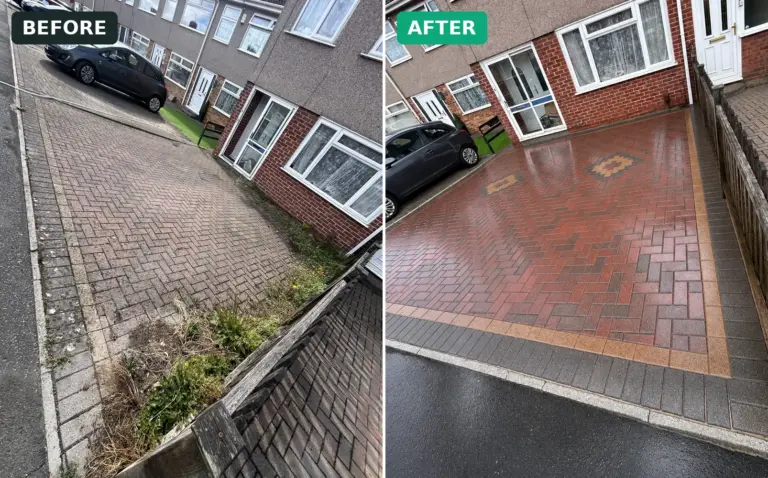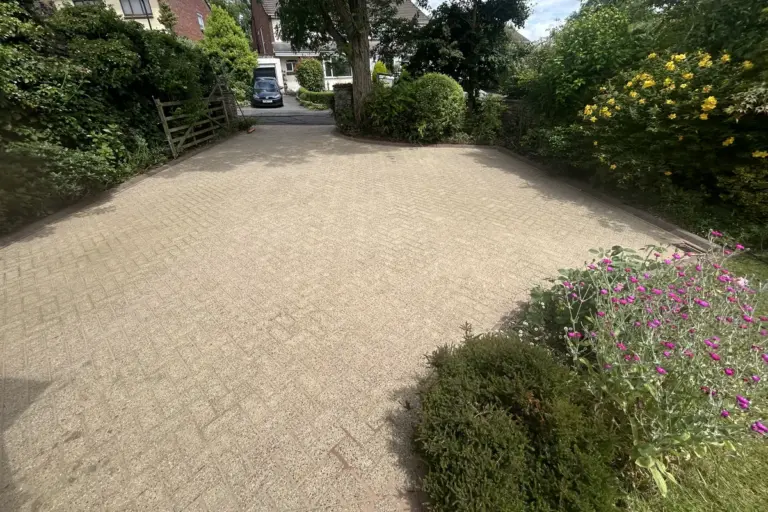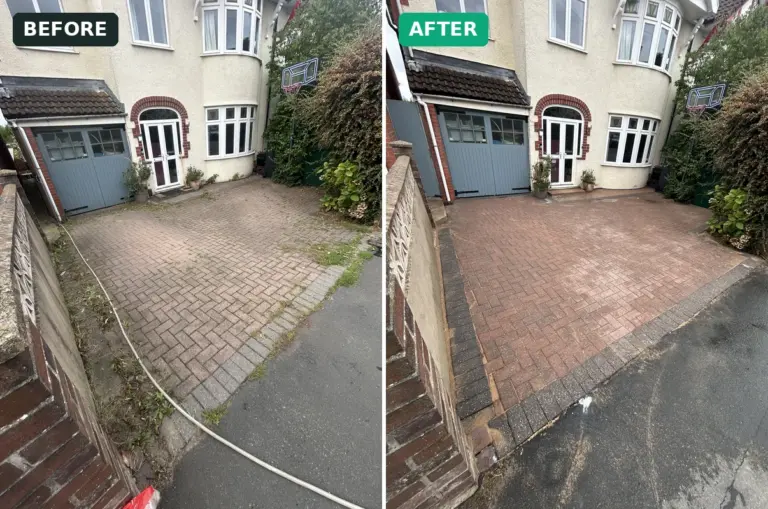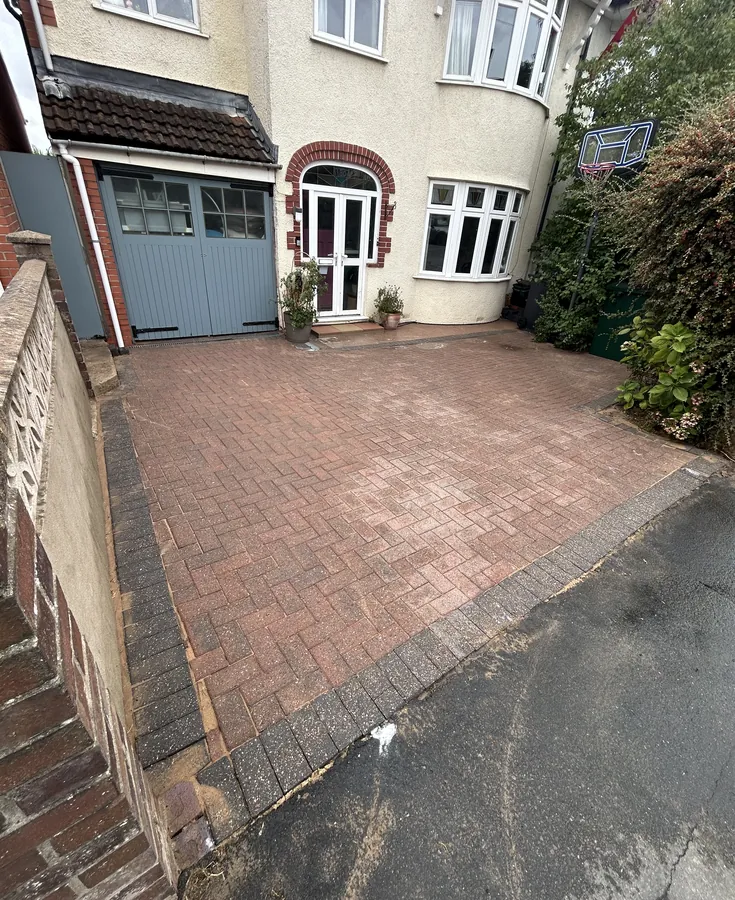
Is it worth sealing block paving, or is it just an extra to push the price up? A good block paving sealer, applied properly, does several useful things. Applied in a hurry, it can ruin the look of a driveway overnight. Here are the benefits, and how to avoid the white patches.
Thinking of having your block paving sealed?
Send us a few photos and the approximate size for a price.
The short answer: a block paving sealer inhibits weeds, makes the joints solid and stops oil and paint from soaking into the blocks. It only works if the paving is completely dry and the weather is right. Seal over damp joints, and the sealer turns white.
What a block paving sealer does
A sealer is applied over clean, dry, re-sanded block paving. It coats the surface of the blocks and soaks into the sand in the joints, binding it together. Once it has cured, the whole driveway is better protected against the things that spoil it.
The benefits of sealing block paving
- It inhibits weeds. The sand in the joints is bound together, so seeds have nowhere to settle and grow.
- The joints become solid. The sand stays where it is, instead of being swept or washed out, and the blocks stay locked together.
- It protects against oil stains. If oil leaks from the sump of a car, the sealer does not let it penetrate the block paving. It keeps the oil on the surface, which makes it much easier to clean.
- It protects against paint spills. The same applies to an accidental paint spillage. It stays on top instead of soaking in.
- It makes the driveway easier to look after. Dirt and spills sit on the surface, so the next clean is quicker.
Anyone who has tried to lift old oil out of unsealed blocks will understand the value of that third point. See how to get engine oil off a driveway.
How block paving should be sealed
- The paving is cleaned and treated, and the joints are cleared out.
- It is left to dry for two to three sunny days. The water in the joints needs that time to evaporate.
- The kiln-dried sand goes in on the day of sealing. Not on the day of cleaning, even if the weather is dry and sunny, because the joints need to air and dry out properly first.
- The sealer is applied on a sunny day, with at least 12 hours before the first rain, so that it has time to cure and water cannot get in through it.
Why some sealed driveways turn white
You may have seen it: a driveway sealed one day and covered in white, milky patches the next. This is known as blooming, and it is almost always caused by moisture.
If the paving is sealed while there is still water in the joints, or if rain arrives before the sealer has cured, that water is trapped underneath. When it tries to evaporate, it pushes the sealer up from below and turns it white and cloudy.
It is entirely avoidable. It only takes patience: two to three sunny days of drying after the clean, a dry day for the sealing and at least 12 dry hours afterwards. Those are the steps that get skipped when a job is rushed into one day.
When block paving should not be sealed
- When the paving or the joints are still damp.
- When rain is forecast within 12 hours.
- When it has not been properly cleaned first. A sealer locks in whatever is underneath it, including dirt and stains.
Sealing, polymeric sand or just kiln-dried sand?
- Kiln-dried sand is included in every block paving clean. It locks the blocks and slows the weeds. See kiln-dried sand for block paving.
- Polymeric sand sets hard in the joints and inhibits weeds for far longer. See polymeric sand for block paving.
- Sealing protects the whole surface as well as the joints, and is the only one of the three that helps with oil and paint.
How much does it cost to seal block paving?
It depends on the size of the area and the condition of the paving. Block paving cleaning starts from £5 per square metre, and sealing is priced as an upgrade. Send us a few photos and the approximate size for a price. Our driveway cleaning cost guide explains what is included.
See how we do it, step by step, on our block paving sealing in Bristol page, or read more about block paving cleaning and driveway cleaning in Bristol.
Block paving sealer: frequently asked questions
What are the benefits of sealing block paving?
Sealing inhibits weeds, makes the joints solid so the sand stays in place, and stops oil and paint from soaking into the blocks, so they are easier to clean off.
Why has my block paving sealer gone white?
White, milky patches are called blooming. Water trapped under the sealer tries to evaporate, pushes the sealer up and turns it white.
How long should block paving dry before sealing?
Two to three sunny days after cleaning, so the water in the joints can evaporate. The sealer then needs at least 12 dry hours to cure.
Does sealing block paving protect against oil stains?
Yes. The sealer stops oil penetrating the blocks and keeps it on the surface, where it is much easier to clean.
Block paving sealing in Bristol
Cleaned, dried, re-sanded and sealed in the right weather.