It is the least glamorous part of a driveway clean, and one of the most important. Kiln-dried sand for block paving is what keeps the blocks locked together and the weeds out, and a clean that leaves it out does more harm than good. Here is what it does, why it must go back and when.
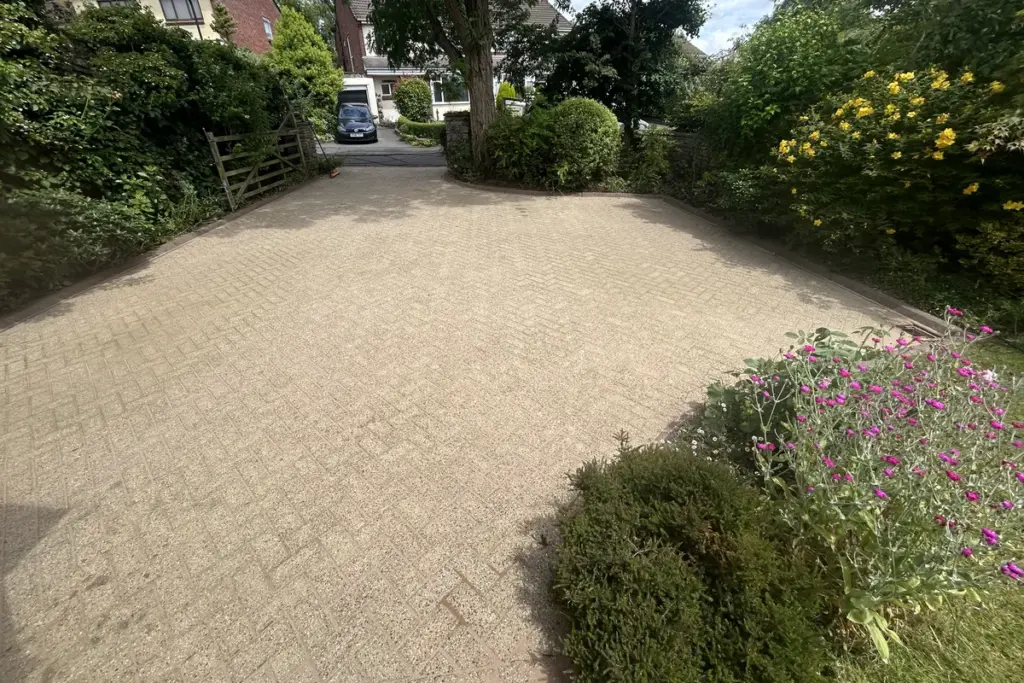
Block paving with empty joints?
Send us a few photos and the approximate size for a price.
The short answer: kiln-dried sand is what holds block paving together. It fills the joints, locks the blocks against each other and slows the weeds. Pressure washing always removes some of it, so it must be put back after every clean. If it is not, the weeds return quickly and the blocks start to move.
What is kiln-dried sand?
Kiln-dried sand is a very fine sand that has been dried in a kiln until it contains no moisture at all. Because it is so dry and so fine, it flows freely and runs right down into the narrow joints between the blocks, filling them from the bottom to the top. Ordinary building sand is damp and coarse, and simply bridges across the top of the gap.
What the sand between the blocks actually does
- It locks the blocks together. Block paving is not glued or cemented down. The sand in the joints creates friction between the blocks, and that friction is what makes hundreds of separate blocks behave like one solid surface.
- It stops the blocks moving under your car. Without sand, the blocks shift and rock under the weight and the turning of the tyres. Over time you get dips, loose blocks and uneven edges.
- It slows the weeds. An empty joint collects soil and seeds. A full one gives them far less room to take hold.
- It protects what is underneath. Full joints help rainwater run off the surface instead of pouring down between the blocks and washing out the bedding below.
Why it has to go back after cleaning
Cleaning block paving properly means cleaning out the joints as well as the faces of the blocks. That is where the weeds, the moss and the dirt are. The same water that lifts them out also takes some of the jointing sand with it.
A driveway that is cleaned and then left with empty joints looks good for a few weeks. After that, the weeds are back faster than before, and the blocks begin to loosen. The clean has made the driveway worse, not better.
That is why our rule is simple: no block paving is cleaned without the kiln-dried sand being put back. It is included in every block paving clean we do, from £5 per square metre, not charged as an extra.
When is the sand put back?
The sand must go into dry joints. If the joints are wet, the sand clumps at the top and never reaches the bottom.
- After a clean: the sand is brushed in once the paving is dry.
- If the paving is being sealed: we leave the joints to air and dry out for two to three sunny days, and the sand goes in on the day of sealing. See block paving sealing in Bristol.
How it is applied
- The sand is spread across the dry paving.
- It is brushed back and forth until every joint is full.
- The surplus is swept off the surface.
Kiln-dried sand or polymeric sand?
Ordinary kiln-dried sand does its job well, and it is what we include as standard. Its limit is that it stays loose, so over the years rain, sweeping and weeds work some of it out again.
Polymeric sand is the upgrade. It sets hard in the joints and inhibits weeds for far longer. We explain the difference in polymeric sand for block paving: benefits and how it works.
Does the sand need topping up?
Yes, from time to time. If you can see the joints sitting low, or blocks starting to move, the sand needs topping up. It is also put back every time the paving is cleaned. Sealing the paving afterwards binds the sand in place, so it lasts much longer. See block paving sealer: the benefits.
What to ask before you book a driveway clean
Ask one question: is the sand put back, and is it included in the price? A quote that leaves it out is cheaper on the day and more expensive within a year. Our driveway cleaning cost guide shows exactly what is included in ours.
See our driveway cleaning in Bristol page for every type of driveway we clean, or read how to stop weeds growing in block paving.
Kiln-dried sand for block paving: FAQs
Why do you need kiln-dried sand for block paving?
Kiln-dried sand fills the joints and locks the blocks together. It stops the blocks moving under car tyres, slows weed growth and helps water run off the surface.
Do you need to re-sand block paving after pressure washing?
Yes. Pressure washing removes some of the jointing sand. If it is not replaced, weeds return quickly and the blocks start to move.
Can you put kiln-dried sand on wet block paving?
No. The joints must be dry, or the sand clumps at the top and does not fill the joint. The sand is brushed in once the paving has dried.
What is the difference between kiln-dried sand and polymeric sand?
Kiln-dried sand stays loose in the joints. Polymeric sand sets hard and inhibits weeds for far longer, so it is offered as an upgrade.
Block paving cleaning in Bristol from £5 per square metre
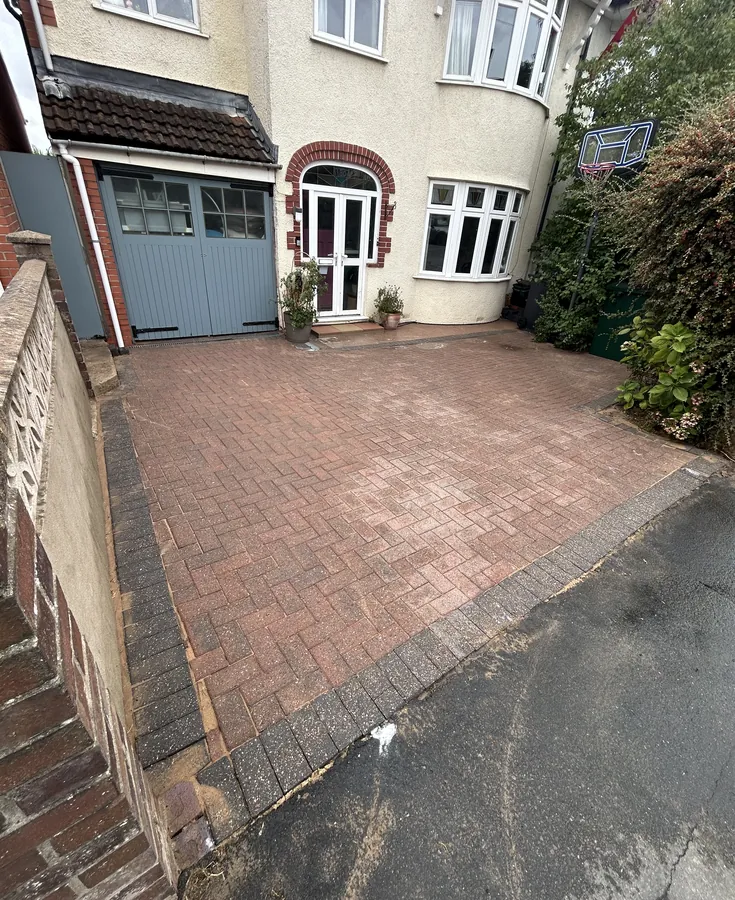
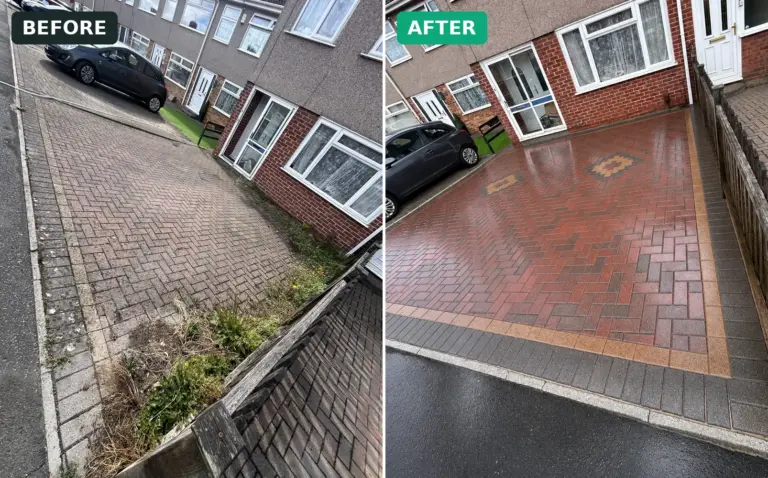
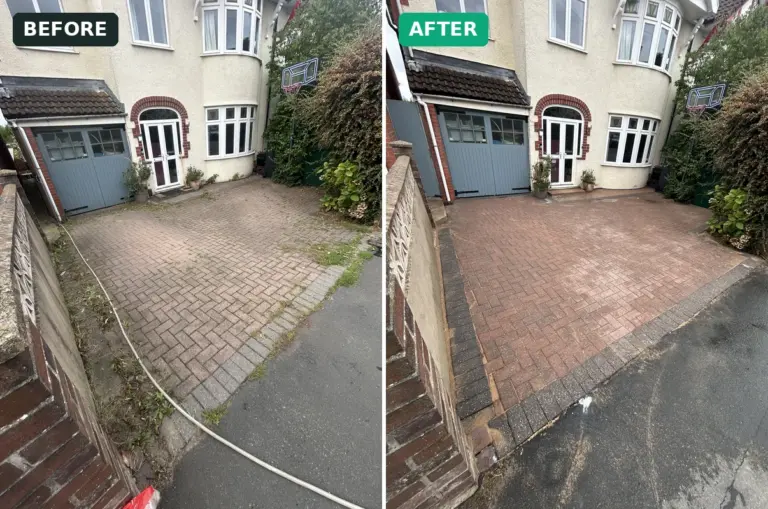
Treated before and after, and always re-sanded with kiln-dried sand.