

The right approach depends on the type of decking, the condition of the paint, and how deep it has penetrated.
And if the job feels too time-consuming or risky, our decking cleaning service can restore your deck safely, using the right techniques for each surface.
Do you want to remove paint from your decking without the risk of damaging it?
We use safe methods and suitable solutions to remove paint and old coatings without affecting the decking surface.
What type of deck do you have?
- Important: The type of decking affects how safely paint can be removed, so it’s worth identifying it before choosing a method.
The most forgiving option. Sanding, scraping, and controlled pressure washing usually work well, depending on the condition.
Softer or older wood can be damaged easily, so pressure and aggressive sanding should be used with care. Paint strippers may help in tougher cases.
More sensitive than wood. It doesn’t absorb paint in the same way, but it can be damaged by harsh methods.
Sanding and strong chemicals are usually not recommended. A gentler approach, like soft washing, is the safer option.
Non-porous and fully synthetic, so paint tends to sit on the surface.
Easier to clean in some cases, but still sensitive to harsh chemicals or high pressure. A controlled, surface-safe method works best.
Paint removal methods (what actually works)
Some methods work better than others depending on how stubborn the paint is and what type of decking you’re dealing with. In most cases, it’s not about using just one method, but choosing the right approach for the situation.
Best for thick, stubborn layers that don’t come off easily. They break down the paint so it can be lifted from the surface, but they’re not always the safest option. Some products can be too aggressive, especially on composite or PVC decking, so choosing the right one matters.
- Important: In many cases, especially with thick or older layers, paint stripping may be needed to fully remove the coating.
Useful for removing loose or peeling paint. Works well as a starting point, but too much pressure can damage the surface. It’s all about control, lower pressure, wider spray, and keeping a safe distance.
A solid option for wood decking when you need a clean, even finish. It takes more time, but gives better control over the result. Not suitable for composite or PVC, as it can damage the outer layer.
Good for smaller areas or where paint is already flaking. A heat gun softens the paint, making it easier to remove, while scraping gives you precision. Slower, but more controlled, especially around edges or details.
Tools & materials you’ll need
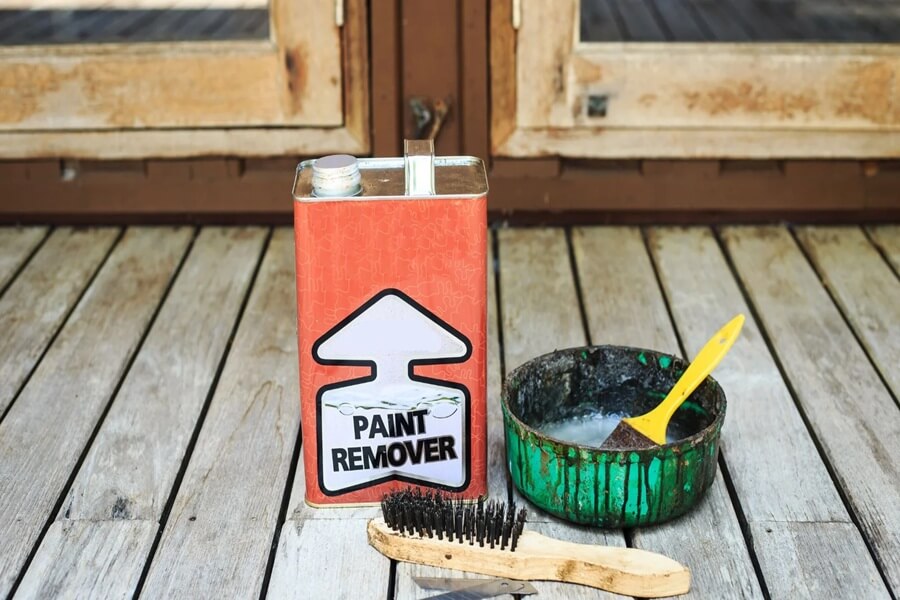
- Scraper or putty knife.
- Sandpaper / sander.
- Pressure washer.
- Deck-safe paint stripper.
- Brush (soft or stiff).
- Heat gun (optional).
- Gloves & eye protection.
How to remove paint from a deck (7 easy steps)
You don’t always need complicated tools, just the right approach and a bit of patience. Here’s a simple process that works in most cases.
Step 1: Prepare the deck
Remove furniture, debris, and anything that might get in the way. This gives you full access and helps avoid uneven results.
Step 2: Clean the surface first
Before removing the paint, clean the surface to get rid of dirt, algae, or loose debris. It makes the next steps much easier.
Step 3: Apply paint stripper
For thicker or older layers, apply a decking-safe paint stripper and allow it to break down the coating.
Step 4: Remove the paint
Use a scraper, pressure washer, or a combination of methods to lift the paint from the surface.
Step 5: Rinse and clean the deck
Once the paint is removed, rinse the deck thoroughly to clear any remaining residue.
Step 6: Sand the surface
If you’re working with wood, light sanding helps even out the surface and prepare it for finishing.
Step 7: Let it dry before finishing
Allow the deck to dry completely before applying any treatment, stain, or seal.
When should you remove paint from a deck?
You don’t always need to strip paint straight away, but there are clear signs when it’s the right move.
- Peeling or flaking paint.
- Uneven or patchy appearance.
- Slippery surface due to trapped moisture or algae.
- Preparing the deck for staining or refinishing.
Doing it yourself or hiring a professional
Some jobs are straightforward, but others can quickly become time-consuming or risky, especially if the paint is thick or the surface is sensitive.
For smaller areas or light paint, a DIY approach can work well. But for larger decks, multiple layers of paint, or delicate materials, professional cleaning is often the safer and more effective choice.
At GB Cleaning, we use safe, surface-specific methods to remove paint and restore your decking without damage.
Using too much pressure, choosing the wrong method for the decking type, or jumping straight into sanding without cleaning first. These can damage the surface or make the job harder.
It depends on the size of the deck and how thick the paint is. Small areas may take a few hours, while larger or heavily painted decks can take a full day or more.
It can remove loose or peeling paint, but it won’t always be enough on its own. Too much pressure can also damage the decking, so it needs to be used carefully.
Yes, especially if the paint is not deeply bonded. Methods like scraping, pressure washing, or paint stripping can often remove it without the need for sanding.


