

If your decking has started to turn green, you’re probably wondering what the best cleaning method is and whether you can remove the algae without damaging the surface. Choosing the wrong products or using a pressure washer incorrectly can do more harm than good, which is why it’s important to choose the right method.
Has your decking turned green and slippery?
We remove algae and persistent buildup using safe methods tailored to each type of decking.
Why does algae grow on decking?
In most cases, algae grow when moisture remains on the surface for long periods of time. Shade, a lack of air circulation, and the build-up of leaves or dirt create the ideal conditions for them to develop.
For this reason, decking that dries slowly after rain or receives very little direct sunlight is far more prone to algae growth than a surface that is well ventilated and exposed to the sun.
Why does decking turn green so quickly?
In the UK, the damp climate encourages algae growth for much of the year. North-facing areas, surfaces located near trees or dense vegetation, and places that receive very little direct sunlight are usually the most affected.
When moisture remains for long periods of time, algae develop more easily and can quickly cover certain parts of the decking. This is why some areas turn green much faster than others, even within the same property.
How to Clean Wood Decking (Step-by-Step)
Before you start, it’s important to follow the right order. Cleaning wood decking properly helps remove dirt without damaging the surface.
Step 2: Apply cleaning solution
Use warm water with washing-up liquid or a wood-safe decking cleaner. Apply evenly across the surface and leave for 5-10 minutes to loosen dirt, algae, and stains.
Step 3: Scrub the deck
Scrub gently using a stiff brush. Always follow the direction of the wood grain to avoid scratching or damaging the surface. Focus more on visibly dirty or stained areas, there’s no need to over-scrub the entire deck.
Step 4: Rinse thoroughly
Rinse with a garden hose or very low pressure. Make sure all residue is removed, especially between the boards.
Step 5: Let it dry
Allow the decking to dry completely before using it. This helps prevent moisture buildup and reduces the risk of mould returning.
Are algae just an aesthetic problem?
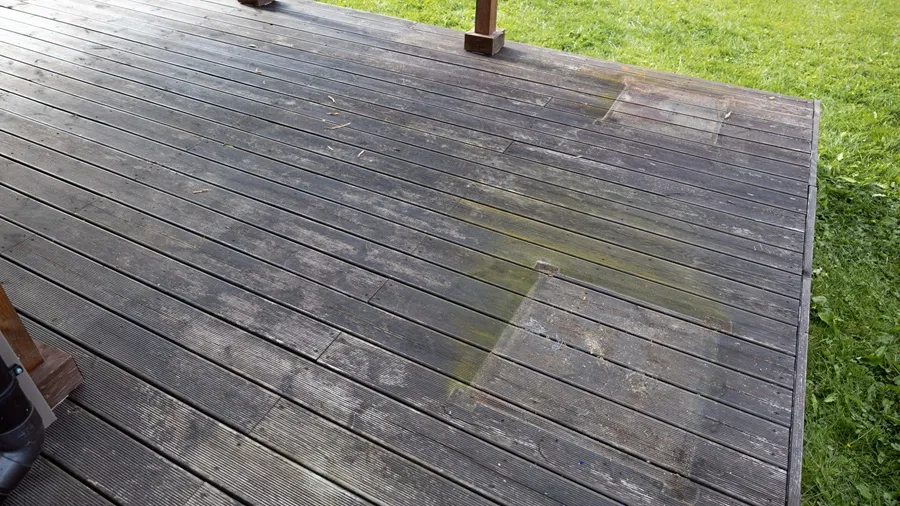
Although many people first notice the change in the colour of their decking, algae can also become a safety issue. As they develop, they form a slippery layer that increases the risk of accidents, especially after rain or during periods of high humidity.
This can be particularly important for families with children, older people, or anyone who uses the patio frequently. In addition, algae retain moisture on the surface for longer, which can make it harder for the decking to dry naturally
If the problem is ignored for long periods, the build-up can become more difficult to remove, and maintenance may require more time, more products, and higher costs.
The difference between algae, moss and mould
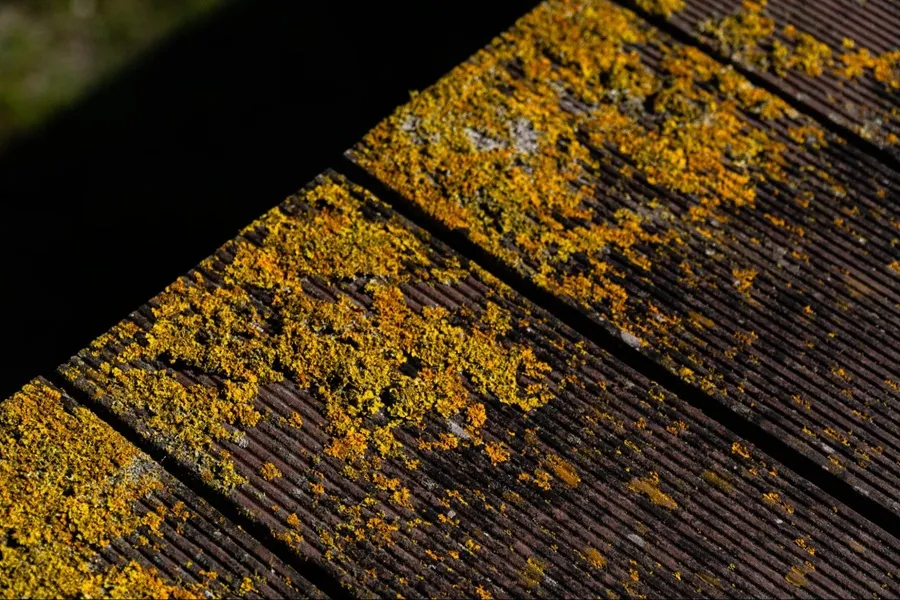
Algae usually appear as a thin green layer covering the surface of the decking. Moss is denser and has a soft or fluffy appearance, and is often found in gaps, corners and areas that retain a lot of moisture.
Mould can vary in colour, from white and grey to green or black, and usually appears on surfaces that remain damp for long periods of time.
Because they all develop in similar conditions and can affect the appearance of decking, they are often confused with one another. However, correctly identifying the problem is important because the cleaning and prevention methods may differ from one case to another.
How can you remove algae from decking?
In most cases, algae can be removed using a simple cleaning and surface treatment process. The important thing is not to skip any steps and to use the right products for your decking.
Step 1: Remove leaves and built-up dirt
Before applying any treatment, sweep the surface and remove leaves, soil, and other debris that could prevent the cleaning product from reaching the algae directly.
Step 2: Apply an algae treatment
Use a product designed to remove algae and apply it according to the manufacturer’s instructions. This will help loosen and remove the build-up from the surface.
Step 3: Clean the surface
Once the treatment has had time to work, clean the decking using a brush or a method suitable for the level of contamination. In many cases, this step is enough to remove most of the algae.
Step 4: Rinse the surface thoroughly
Finally, rinse the decking to remove any remaining residue and allow it to dry completely before use.
The sooner the problem is dealt with, the easier the cleaning will be and the longer the results will last.
What products can be used to remove algae?
There are several options for removing algae from decking, ranging from specialised products to solutions used at home. The right choice depends on the level of contamination and the results you want to achieve.
These are specially designed for cleaning and maintaining outdoor surfaces. They remove algae without damaging the decking when used according to the manufacturer’s instructions.
These products remove existing algae and help prevent them from coming back. They are often used when the problem is more widespread or keeps returning.
For light build-up, some people use mixtures made with water and vinegar. These may provide temporary results, but they are generally less effective than dedicated products.
- What should be avoided? Avoid using very harsh products or applying excessive amounts of bleach. These can affect the appearance of the decking and may damage nearby plants.
The advantages and disadvantages of each option
In general, dedicated decking products and biocide-based solutions provide the best long-term results, while homemade solutions can be useful for minor problems or quick treatments.
| Option | Advantages | Disadvantages |
|---|---|---|
| Dedicated decking products | Safe for the surface, consistent results | Higher cost |
| Biocide-based solutions | Highly effective, longer-lasting effect | Require correct application |
| Homemade solutions | Low cost, easy to prepare | Less durable results |
Is pressure washing safe for decking?
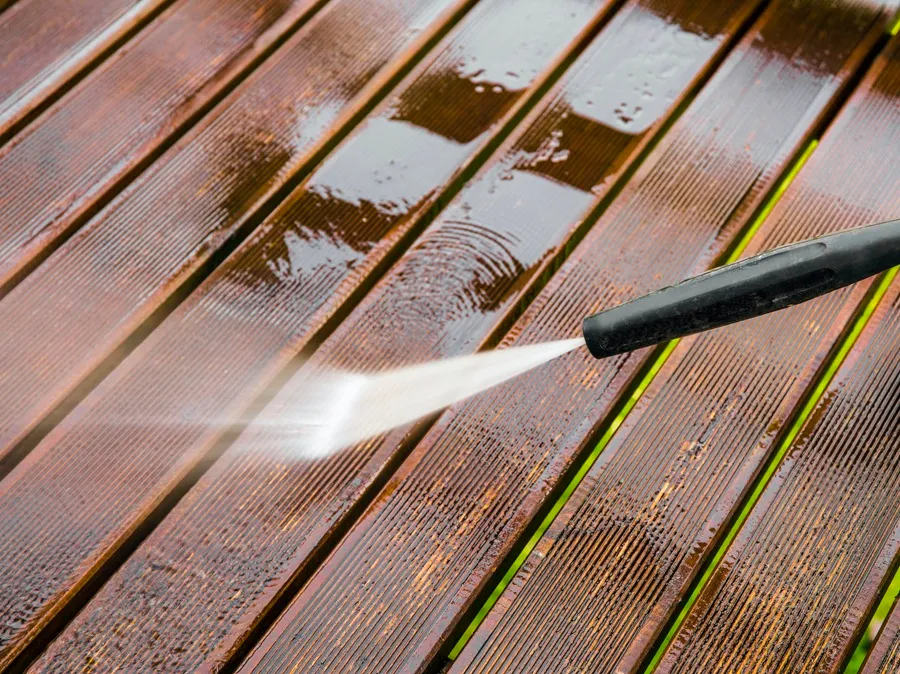
It can be an effective method for removing algae from decking, but only when it is used correctly. Many homeowners choose this solution because it delivers quick results, but using the wrong pressure can damage the surface more quickly than they realise.
In general, pressure washing is safer when algae are spread across larger areas or when normal cleaning methods no longer provide satisfactory results. In these situations, choosing the right pressure and using the correct equipment are essential.
Problems arise when too much pressure is used or when the jet is held too close to the surface. This can damage the outer layer of the decking, leaving the wood more vulnerable to moisture and wear.
Common mistakes that can damage decking
Although pressure washing can remove algae effectively, certain mistakes can cause more problems than benefits.
- It can damage the wood fibres.
- It can leave visible marks on the surface.
- A jet that is too concentrated can damage certain areas of the decking.
- The cleaning becomes uneven and more aggressive than necessary.
- It increases the risk of localised damage.
- It can remove more than just the layer of dirt and algae.
- Some solutions can affect the appearance of the surface.
- They can damage the plants and surrounding areas around the decking.
- Frequent pressure washing is not always necessary.
- Over time, it can contribute to premature wear of the surface.
- If you're unsure about the right pressure to use or the condition of your decking, it's safer to start with gentler cleaning methods and only increase the intensity if necessary.
How can you prevent algae from coming back?
After cleaning, a few simple measures can significantly reduce the risk of algae returning.
- 1.
Remove dirt, dust and other build-up before they begin to retain moisture.
- 2.
Built-up leaves retain moisture on the surface and create favourable conditions for algae to grow.
- 3.
Where possible, avoid water build-up and ensure the surface has proper drainage.
- 4.
Trees, shrubs, or very dense vegetation can prevent the decking from drying naturally after rain.
- 5.
Regular checks allow you to identify problems before they turn into a difficult and costly cleaning job.
How often should decking be checked and cleaned?
The frequency largely depends on the location of the surface.
- Shaded areas require more frequent checks because they take longer to dry.
- Sunny areas are usually less affected and require less maintenance.
Among the first signs that algae are starting to return are:
- the appearance of isolated green patches;
- the surface becoming more slippery;
- areas that remain damp for longer after rain.
The sooner you notice these signs, the easier it will be to deal with the problem.
When is professional cleaning recommended?
Many cases of algae can be dealt with using normal cleaning methods. However, there are situations where professional cleaning may be a safer and more effective choice.
It’s worth considering the help of a specialist when:
- the surface is very large and cleaning it would require a lot of time and effort;
- the algae return quickly after each cleaning;
- the decking has become very slippery and poses a risk to users;
- you're not sure which products or methods are suitable for your surface;
- there is a risk of damaging the decking by using a pressure washer incorrectly.
If you’re unsure about the right cleaning method, it’s always better to ask for advice before you start. In some cases, using too much pressure or the wrong product can cause more damage than the algae itself.
At GB Cleaning, we regularly come across decking affected by algae, moss and persistent build-ups of dirt. You can contact us for advice or an assessment of the surface before making a decision.
Sometimes, a few pieces of the right advice can help you deal with the problem safely, while at other times, professional cleaning may be the best solution for protecting your decking in the long term.
Below, we’ve answered some of the most common questions we receive from customers who are dealing with algae on their decking and want to remove it safely.
Bleach can remove algae temporarily, but it is not always the best choice for decking. Excessive use can affect the appearance of the surface and may damage the surrounding plants. In general, it is safer to use dedicated decking products or solutions recommended by the manufacturer.
It depends on the conditions your decking is exposed to. Shaded surfaces located near trees or dense vegetation are more likely to experience a rapid return of algae. Regular maintenance and removing leaves can help reduce this risk.
Yes. In many cases, algae can be removed using suitable cleaning products and a stiff-bristled brush. Pressure washing can be useful in certain situations, but it is not the only solution and is not always necessary.
Vinegar can help remove light algae build-up and is often used as a homemade cleaning solution. However, for more widespread or persistent growth, dedicated products usually provide better and longer-lasting results.
Algae do not damage decking immediately, but they can contribute to keeping moisture on the surface for longer periods of time. If they are ignored, they can make the surface more slippery, more difficult to maintain, and more prone to long-term problems.


