

The good part is that cleaning it properly is simple. In most cases, you don’t need harsh chemicals or complicated products, just warm soapy water, a soft brush, and the right approach.
If you’d rather not deal with the cleaning yourself or the decking hasn’t been maintained for a while, a professional decking cleaning service can help restore it safely without causing damage.
Here’s how to do it safely and get the best results.
1. Prepare the deck
2. Rinse the surface
3. Apply a cleaning solution
4. Gently scrub the deck
5. Rinse thoroughly
6. Let it dry before use
Do you want to clean your composite decking without the risk of damaging it?
We use safe methods and suitable solutions to remove dirt, algae and stains without affecting the decking surface.
What is composite decking?
Composite decking is a type of decking made from a blend of recycled wood fibres and plastic. It’s designed as a low-maintenance alternative to traditional timber, offering better resistance to moisture, rot, and insects.
Unlike natural wood, it doesn’t need regular sealing or staining, but it still requires occasional cleaning to keep it looking its best.
Step-by-Step: How to clean composite decking properly
Following the correct steps helps remove dirt efficiently while protecting the surface.
Step 1: Clear and prepare the deck
Start by removing all furniture, planters, and any loose items from the decking. Sweep away leaves, dust and debris using a soft broom.
Step 2: Rinse the surface
Use a garden hose to rinse the decking and loosen any surface dirt. Avoid high pressure at this stage, as it’s not necessary and could push debris deeper into the boards.
Step 3: Apply a cleaning solution
Mix warm water with a mild soap or decking cleaner. Apply it evenly across the surface using a bucket or watering can. Avoid harsh chemicals like bleach unless the manufacturer specifically recommends them.
Step 4: Gently scrub the deck
Use a soft-bristle brush to scrub the boards, working along the grain. Focus on areas with visible dirt or algae, but avoid aggressive scrubbing that could damage the finish.
Step 5: Rinse thoroughly
Rinse the decking again with clean water to remove any remaining soap or residue. Make sure no cleaning solution is left behind, as it can leave marks once dry.
Step 6: Let it dry before use
Allow the decking to air dry completely before placing furniture back or walking on it. This helps prevent slipping and ensures a clean, even finish.
What you need before you start
Before you begin, make sure you have the right tools and materials. Using the correct equipment helps clean effectively while avoiding damage to the decking surface.
- A soft-bristle brush or decking brush.
- A bucket with warm water.
- Mild soap or a composite decking cleaner.
- A garden hose (or low-pressure washer if suitable).
- A broom for removing loose debris.
- Protective gloves (optional).
Common mistakes to avoid when cleaning a composite deck
A few simple mistakes can reduce results or damage the decking over time.
- Using harsh chemicals: can damage or discolour the surface.
- Using a hard brush: may scratch the boards.
- Too much pressure: unnecessary risk of marks.
- Letting dirt sit too long: leads to staining and buildup.
How often should you clean it?
Composite decking should be cleaned at least twice a year to keep it in good condition. A thorough clean in spring and another in autumn is usually enough for most homes.
If your decking is in a shaded or damp area, you may need to clean it more often to prevent algae and dirt buildup. Regular light cleaning, such as sweeping and occasional rinsing, also helps maintain its appearance between deeper cleans.
Is pressure washing safe for composite decking?
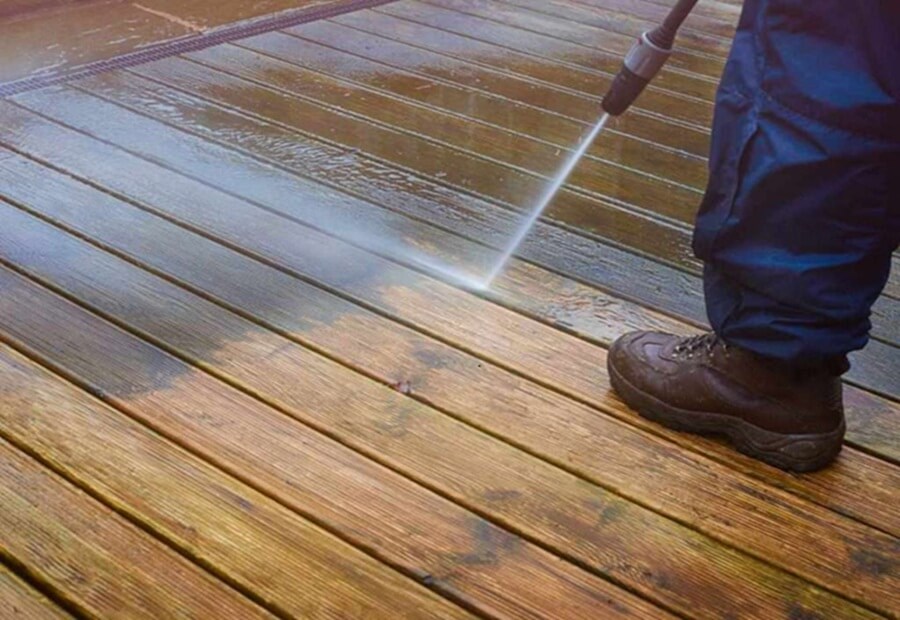
Pressure washing can be used on composite decking, but only with the right settings and technique. Used incorrectly, it can damage the surface, leaving marks or reducing its lifespan.
Pressure washing is generally safe when the decking is heavily soiled and standard cleaning methods aren’t enough. It should only be used occasionally, not as a regular cleaning method.
If you choose to use a pressure washer, keep the pressure low (typically under 1500 PSI) and use a wide fan nozzle. Maintain a safe distance from the surface (around 20–30 cm) and always spray along the direction of the boards to avoid damage.
Avoid pressure washing if the decking is lightly dirty, as a simple brush and soapy water are usually enough. It should also be avoided if you’re unsure about the correct settings or if the decking manufacturer advises against it.
The best time of year to clean your decking
The best time to clean your composite decking is during spring and autumn.
A spring clean helps remove dirt and buildup from winter, while an autumn clean clears fallen leaves and organic debris before the colder months.
Protecting your composite decking from damage
Keeping your decking in good condition isn’t just about cleaning, but also about preventing damage over time.
- Sweep regularly to remove dirt and debris.
- Clean spills as soon as possible to avoid staining.
- Avoid using harsh chemicals or abrasive tools.
- Use furniture pads to prevent scratches.
- Keep drainage gaps clear to prevent water buildup.
- Trim nearby plants to reduce moisture and algae growth.
Professional Composite Decking Cleaning
Cleaning composite decking is usually straightforward, but when there’s heavy dirt, algae, or staining, professional cleaning can make a real difference.
At GB Cleaning, we use safe, effective methods tailored to the condition of your decking, from gentle washing to low-pressure cleaning.
Yes, a small amount of washing-up liquid mixed with warm water is usually safe for routine cleaning.
Algae can be removed using a soft brush and a mild cleaning solution. Gently scrub the affected areas and rinse well. In more severe cases, a specialised decking cleaner or professional cleaning may be needed.
Bleach is generally not recommended unless the manufacturer specifically allows it. It can damage the surface or cause discolouration, so it’s safer to use mild cleaners designed for composite materials.
No, composite decking does not require sealing like traditional wood. It’s designed to be low-maintenance, although regular cleaning is still needed to keep it looking its best.
Capped composite decking has a protective outer layer that makes it more resistant to stains, moisture and fading. Uncapped boards don’t have this layer, so they may require more frequent cleaning and care.


