The short answer: a painted door can be stripped with a heat gun, with a paint stripper or by door dipping. Heat and paint stripper are the gentler methods, because the door stays in one piece and under control. Whichever you choose, the door has to be sanded afterwards, and old paint must be handled carefully, because it can contain lead.
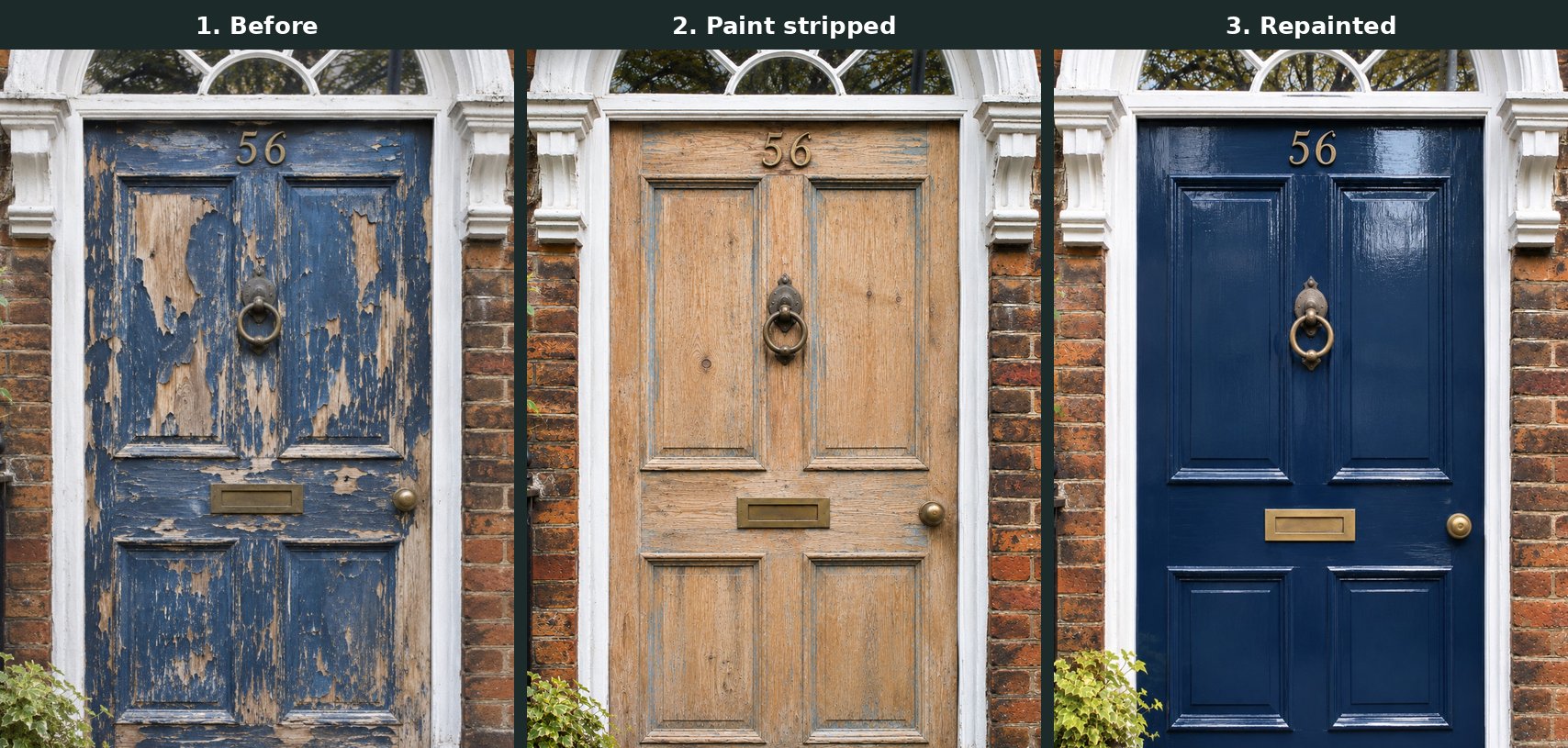
 Before
 After
The same door was then repainted. Here are the three stages of the job, from peeling paint to bare wood to a new navy blue gloss finish.
Why strip a door at all?
Every new coat of paint softens the edges of the panels and the mouldings a little more. After a few decades, the detail has all but disappeared, and the paint starts to chip and peel. Painting over it again only adds to the problem. Stripping the door back to bare wood gives you a clean start, whether you then want to oil it, wax it or repaint it properly.
The three ways to strip a door
- Heat gun. The heat softens the paint, and it is lifted off with a scraper and a wire brush. It is a dry method, and it works well on thick layers.
- Paint stripper. The product is applied and left to soften the paint. Paint and stripper are then scraped off together and collected. This is a semi-wet method, and it is good for mouldings and fine detail.
- Door dipping. The door is taken off its hinges and sent away to be soaked in a tank. It is quick, but the door is out of your hands, and a long soak can raise the grain of the wood and loosen the joints.
Old paint can contain lead
This is the part that many people miss. Paint that was applied decades ago can contain lead, and the dust from it is toxic. That is why old doors should never simply be dry-sanded without protection. The right PPE matters, and so does a vacuum cleaner with a HEPA filter, which captures the fine dust instead of blowing it back into the room.
How we strip doors
- Assessment. We look at the door, at the number of layers and at the type of paint, and we choose the method to suit.
- Stripping. For a dry method, we use a heat gun and a wire brush. For a semi-wet method, we apply a paint stripper, scrape it off with the softened paint and collect it.
- Sanding. Once the paint is off, the door is sanded, so that the wood is clean, even and ready for its new finish.
- Dust control. We wear the right PPE, and we use special vacuum cleaners with HEPA filters.
Stripping paint indoors creates dust and the smell of heated paint. For that reason, we only take on internal doors, stairs and other internal paint stripping in properties that are being renovated and where nobody is living.
You can read about the rest of the service, from stairs and spindles to beams and skirting boards, on our paint stripping in Bristol page.
Our aim is not to have the lowest prices, but to deliver the best quality service for the price that you pay.
We are fully insured, with £5 million public liability cover.
Door stripping: FAQs
What is the best way to strip a door?
A heat gun or a paint stripper, followed by sanding. Both methods keep the door in one piece and under control, and both work well on panels and mouldings.
Is door dipping a good idea?
Door dipping is quick, but the door has to be taken away and soaked. A long soak can raise the grain of the wood and loosen the joints, so it does not suit every door.
Is it safe to strip old paint from a door?
Old paint can contain lead, and its dust is toxic. Use the right PPE and a vacuum cleaner with a HEPA filter, and avoid dry sanding without protection.
How much does door stripping cost?
It depends on the size of the door, on the number of layers and on the type of paint. Send us a photo and we will give you a free quote.
Do you strip doors in homes that are lived in?
For internal paint stripping, we only work in properties that are being renovated and where nobody is living, because of the dust and the smell.