If you are tired of weeds coming back between your blocks every year, you have probably heard of polymeric sand. It is the upgrade from ordinary jointing sand, and it changes how long a clean driveway stays clean. Here is what it is, what it does and how it is applied.
Weeds back in your block paving every year?
Ask us about polymeric sand. Send a few photos for a price.
The short answer: polymeric sand is a jointing sand that sets hard once it has been lightly wetted. In block paving it locks the joints solid, almost like cement, and inhibits weeds for far longer than ordinary kiln-dried sand. It can be applied on the same day as the clean, as long as the paving is dry.
What is polymeric sand?
Polymeric sand looks like ordinary jointing sand when it comes out of the bag. The difference is what happens when a little water touches it. It binds together and hardens in the joint, so instead of loose grains you have a firm, solid fill between the blocks.
On our block paving jobs we use a polymeric jointing sand such as Dansand.
The benefits of polymeric sand in block paving
- It sets hard, almost like cement. The joints become solid instead of loose.
- It inhibits weeds. A hard, full joint gives seeds nowhere to settle and roots nowhere to go.
- It stays in the joint. Because it is bound together, it is not swept out or washed out the way loose sand is.
- It keeps the blocks locked. Solid joints hold the blocks tight against each other, so they do not move under car tyres.
- It lasts. The driveway stays tidy for far longer between cleans.
How polymeric sand is applied
- The block paving is cleaned. The joints are cleared of weeds, moss and old sand.
- The paving must be dry. Polymeric sand can go down on the same day as the clean, as long as the block paving is dry.
- The sand is brushed into the joints until they are full, and the surface is swept clean.
- A little water is applied. Very little, like a light rain. Just enough to activate the sand.
- It is left to dry. As it dries, it becomes solid.
The amount of water matters. Too much washes the binder out of the joint. A light misting is all it needs.
Polymeric sand vs kiln-dried sand
- Kiln-dried sand is included as standard in every block paving clean we do. It locks the blocks and slows the weeds, but it stays loose. See kiln-dried sand for block paving.
- Polymeric sand is the upgrade. It costs more, sets hard and inhibits weeds for far longer.
If weeds are the thing that bothers you most about your driveway, polymeric sand is the option to ask about.
Polymeric sand or sealing?
They are different jobs. Polymeric sand hardens the joints themselves. A sealer coats the whole surface, binds the sand and also stops oil and paint from soaking into the blocks. See block paving sealer: the benefits and our block paving sealing in Bristol page.
A real example from St George, Bristol
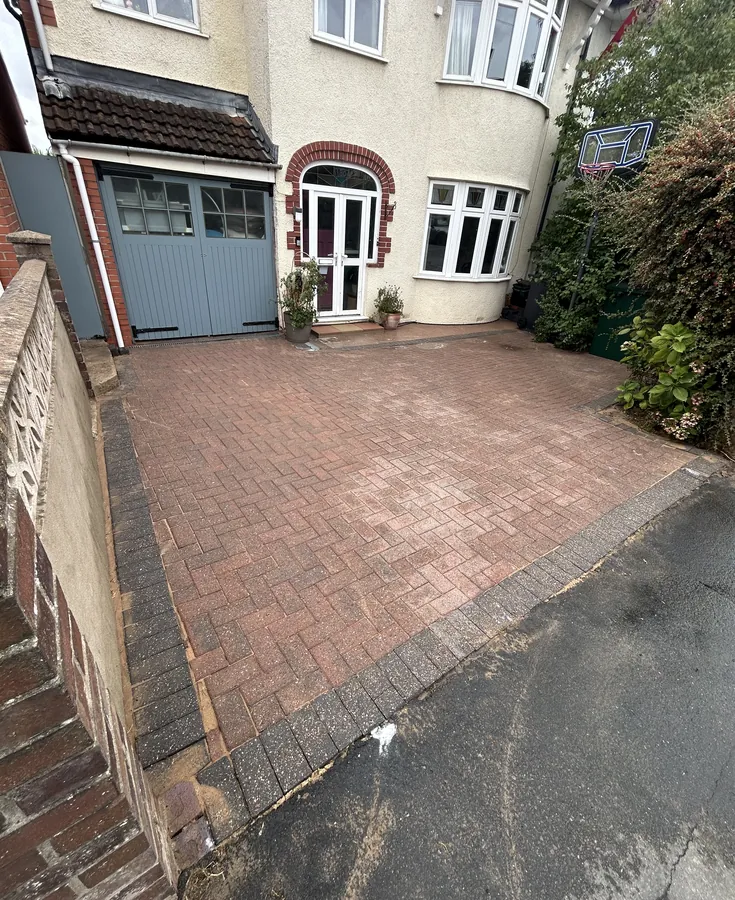
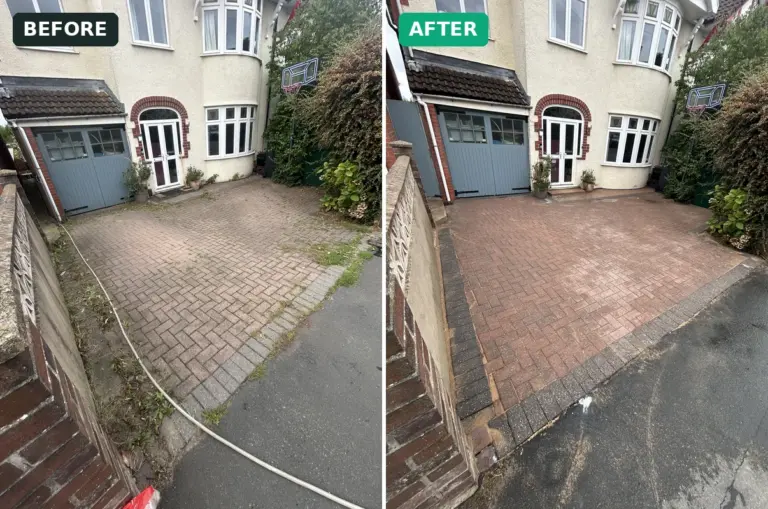
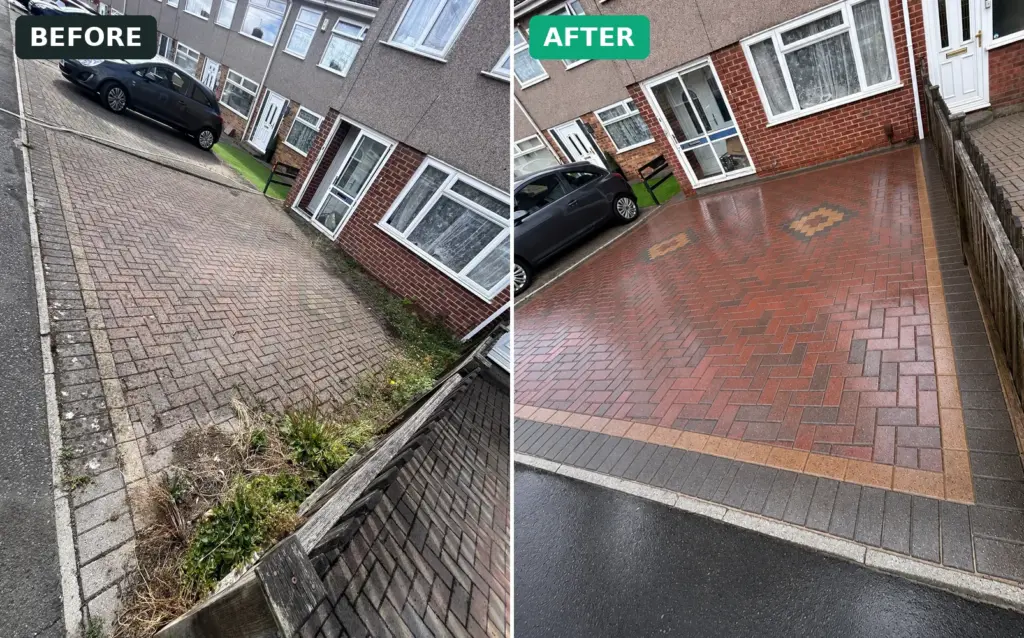
A customer in St George chose to wait 30 days for us to clean their block paving driveway, because of our 5-star reviews. We cleaned it and re-sanded the joints with Dansand polymeric sand. The results speak for themselves, and you can see the before and after photos on our block paving cleaning in Bristol page.
Can you do it yourself?
You can buy polymeric sand, and on a small, simple area it is manageable. The two things that go wrong are damp paving and too much water. The paving has to be properly dry before the sand goes down, and the wetting has to be very light. On a whole driveway, straight after a deep clean, it is easier to get wrong than it looks.
How much does it cost?
Block paving cleaning starts from £5 per square metre with kiln-dried sand included. Polymeric sand is priced as an upgrade. Our driveway cleaning cost guide explains what is included, and you can read more in how to stop weeds growing in block paving.
Polymeric sand for block paving: FAQs
What is polymeric sand?
Polymeric sand is a jointing sand that hardens once it is lightly wetted. In block paving it sets the joints solid, almost like cement.
What are the benefits of polymeric sand?
It sets hard, inhibits weeds, stays in the joints instead of washing out and keeps the blocks locked together for far longer than ordinary sand.
Can polymeric sand be applied the same day as cleaning?
Yes, as long as the block paving is dry. The sand is brushed in, lightly wetted, like a light rain, and left to dry until it becomes solid.
Is polymeric sand better than kiln-dried sand?
Kiln-dried sand does the job and stays loose. Polymeric sand costs more, sets hard and inhibits weeds for far longer.
Block paving cleaning and polymeric re-sanding in Bristol
Cleaned, treated and re-sanded so the weeds stay out.