It is the first thing most people ask before they book: can roof cleaning damage your tiles? It is a sensible question, because a roof is not something you want to gamble with. Here is a straight answer, and what separates a safe roof clean from a risky one.
Worried about your roof? Ask us anything.
Send us a few photos and we will explain exactly how we would clean it.
The short answer: not when it is done by the right team. Professional roof cleaning is carried out at low pressure, way below the pressure used on a driveway, with hot water and steam doing the deep cleaning. Damage happens when someone uses too much pressure, the wrong equipment or no experience.
Where the fear comes from
Most people picture roof cleaning as someone pointing a driveway pressure washer at their tiles at full power. If that were how it was done, the worry would be justified. Too much pressure, held too close, can strip the surface of a tile, force water under the laps and dislodge tiles that were sitting perfectly well.
That is not professional roof cleaning. It is the wrong tool used the wrong way.
How a roof is pressure washed properly
If you hire the right team and the right people, there is practically no way for the cleaning to damage your roof. The reason is simple: even when it is called pressure washing, a roof is cleaned at low pressure.
The pressure we use on roof tiles is way below the pressure we would apply on block paving, for example. A driveway is built to carry cars. A roof tile is built to shed rain. They are not cleaned the same way.
Why we use hot water and steam
If the pressure is kept low, something else has to do the hard work. That something is heat.
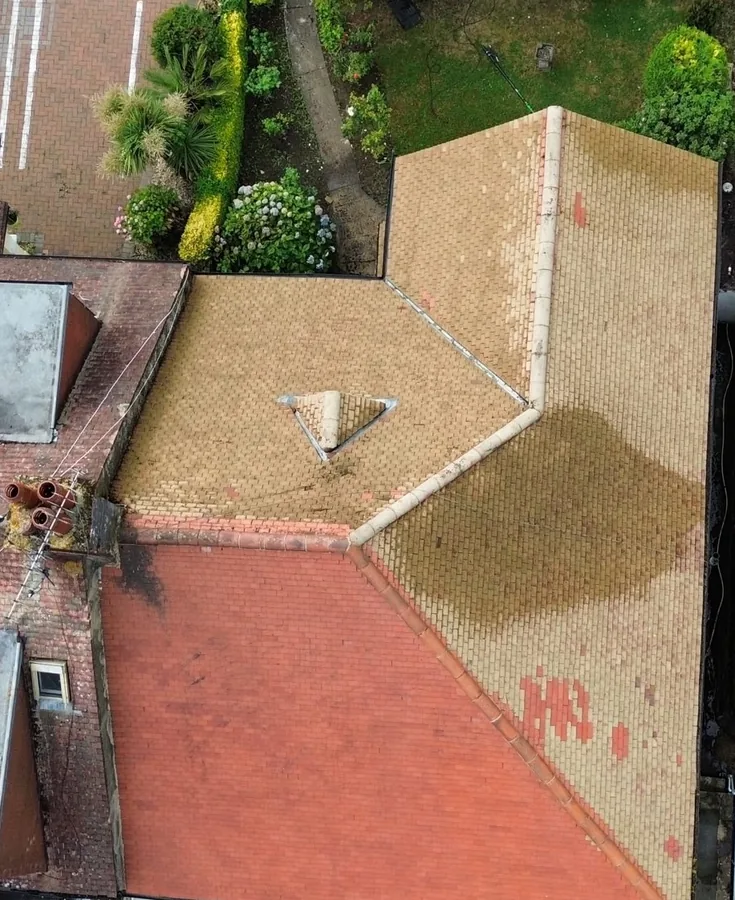
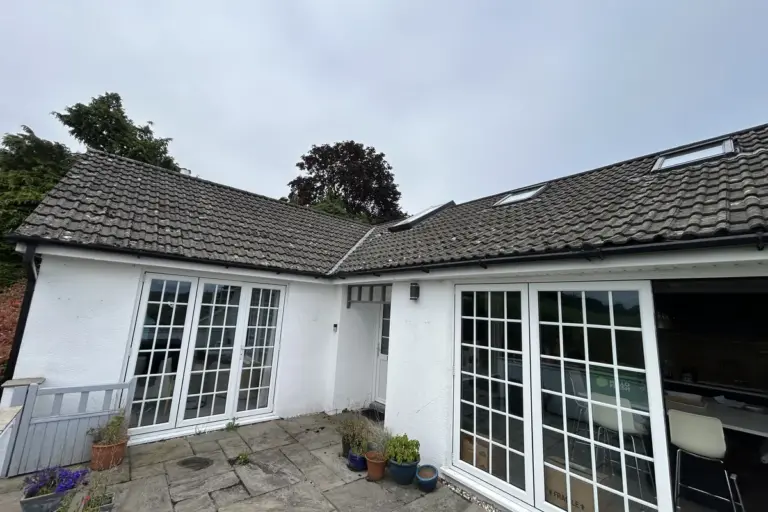
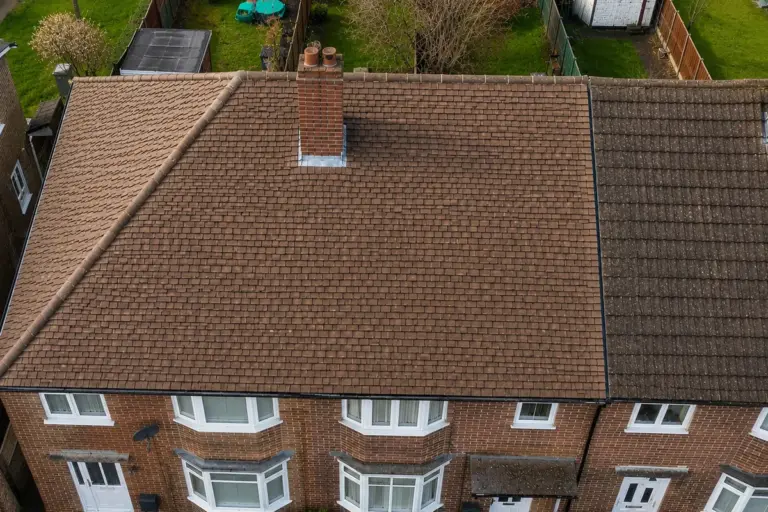
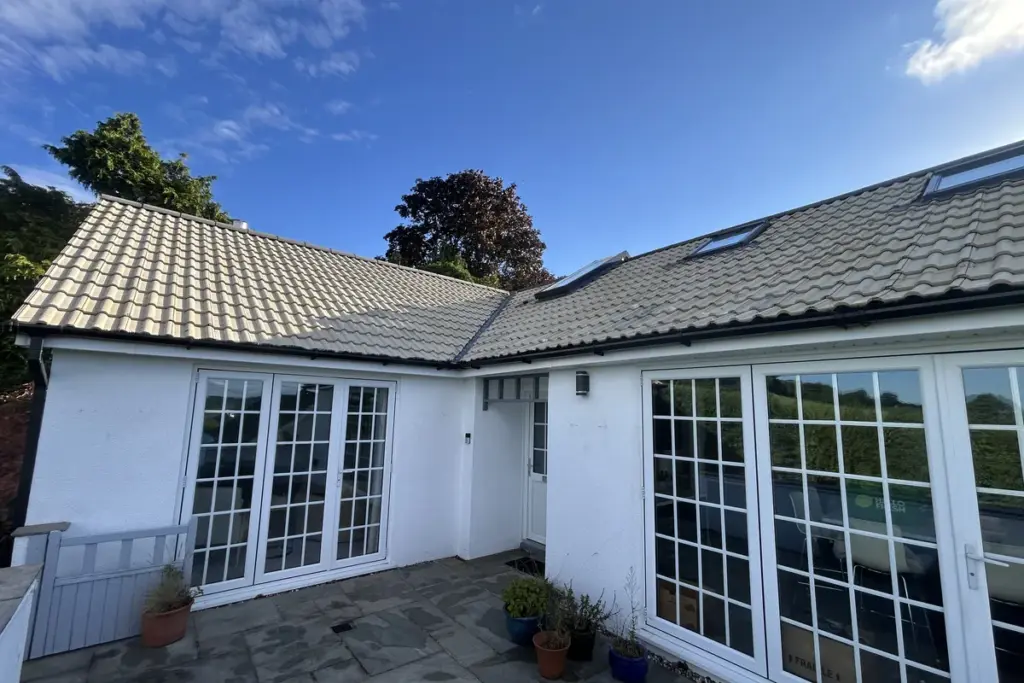
We clean roofs with the DOFF cleaning method (low-pressure steam cleaning): hot water and steam at the same time as the low-pressure wash. Heat loosens moss, lichen and ingrained dirt far more effectively than cold water, so we get a true deep clean at a very reduced pressure. The tiles come up clean without being forced. See DOFF roof cleaning explained.
What about the other methods?
Pressure washing is one of three ways we clean roofs, and the other two involve no pressure washing at all.
- Roof scraping. The moss is scraped off by hand, then a biocide treatment carries on cleaning the tiles over the following weeks.
- Roof soft washing. A professional biocide is sprayed on and left to work, with rain reactivating it for around ten weeks. It is for roofs that are turning green but are not mossy yet. See how long a roof soft wash takes to work.
We compare them in roof soft washing vs roof pressure washing.
“The cleaners cracked my tiles.” Did they?
Sometimes a homeowner sees a cracked or broken tile after a roof clean and assumes the cleaning caused it. Far more often, the crack was already there. It was simply hidden.
Moss, dirt and mildew cover and mask problems. A cracked tile under a thick cushion of moss is invisible from the ground, and often from a ladder too. Once the roof is clean, every tile is on show, and so is any damage that was there all along.
That is a benefit, not a drawback. A cracked tile found today can be replaced before the crack grows, before it causes damage under the tiles and before water finds its way into the house. We go into this in is roof cleaning worth it?
The real risk is leaving the moss
A mossy roof is not a harmless one. Moss holds water against the tiles like a sponge, it hides damage, and the pieces that come loose end up in your gutters, which is why moss on your roof keeps blocking your gutters. Doing nothing is not the safe option it looks like.
How to choose a roof cleaner who will not damage your roof
- Ask what pressure they use. The answer should be low pressure, and they should be able to explain why.
- Ask about heat. Hot water and steam are what allow a deep clean without force.
- Ask whether a biocide treatment is included. Without it, the moss returns.
- Ask to see before and after photos of roofs like yours.
- Check they are insured and have real reviews.
- Be wary of the cheapest quote. Speed and high pressure are how corners get cut.
We have been cleaning exterior surfaces for more than 11 years, and you can see our roof results, including the three-step process we follow, on our roof cleaning in Bristol page. Send us a few photos of your roof and we will tell you which method suits it.
More roof cleaning guides
- DOFF roof cleaning: low-pressure steam cleaning explained
- Roof cleaning cost in Bristol: 2026 price guide
- Roof soft washing vs roof pressure washing
- How long does a roof soft wash take to work?
- Should roof cleaners walk on your roof?
- Is roof cleaning worth it? 7 benefits
- How long does roof cleaning last?
- Already have scaffolding up? Get your roof cleaned for less
Roof cleaning and tile damage: FAQs
Can roof cleaning damage tiles?
Not when it is done properly. A professional team cleans roofs at low pressure, well below the pressure used on driveways, with hot water and steam doing the deep cleaning.
Is it safe to pressure wash a roof?
Yes, with the right team. Roof pressure washing is done at low pressure. Damage comes from high pressure, the wrong equipment or lack of experience.
Why can I see cracked tiles after my roof was cleaned?
In most cases the cracks were already there, hidden under moss and dirt. Cleaning reveals them, so they can be replaced before they cause a leak.
Is it better to leave moss on a roof?
No. Moss holds water against the tiles, hides damage and blocks gutters when it comes loose. Removing it and treating the roof protects it.
Safe, low-pressure roof cleaning in Bristol
Hot water, steam and a professional biocide treatment. Gutters FREE OF CHARGE.